Episode Transcript
[00:00:02] Speaker A: Welcome to your Cases on Hold, the JVGS podcast hosted by Andrew Schoenfeld and Aisha Adkeen.
[00:00:08] Speaker B: Here we discuss the best of what each issue of JBJS has to offer with the usual dose of entertainment and pop culture.
[00:00:16] Speaker A: Take us with you in the gym, on the commute, and as ever, whenever your case is on hold.
Welcome back everyone to your Cases on Hold. This is episode 115.
We are in October.
It is spooky season. Slasher season, I can tell you. Buckle up if you're squeamish. Might want to skip this one because it's going to be a bloodbath.
It's October 7th. I mean it's. Well, it's October 6th if you're listening to us when we drop. Which of course you are, but we are talking about the issue of JBGS that will release on October 7th.
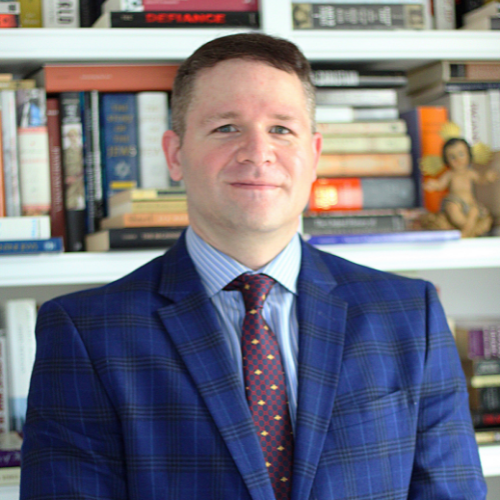
I am Andrew Schoenfeld, Professor, Department of Orthopedic Surgery and Vice Chair for Education, Harvard Medical School and my co host.
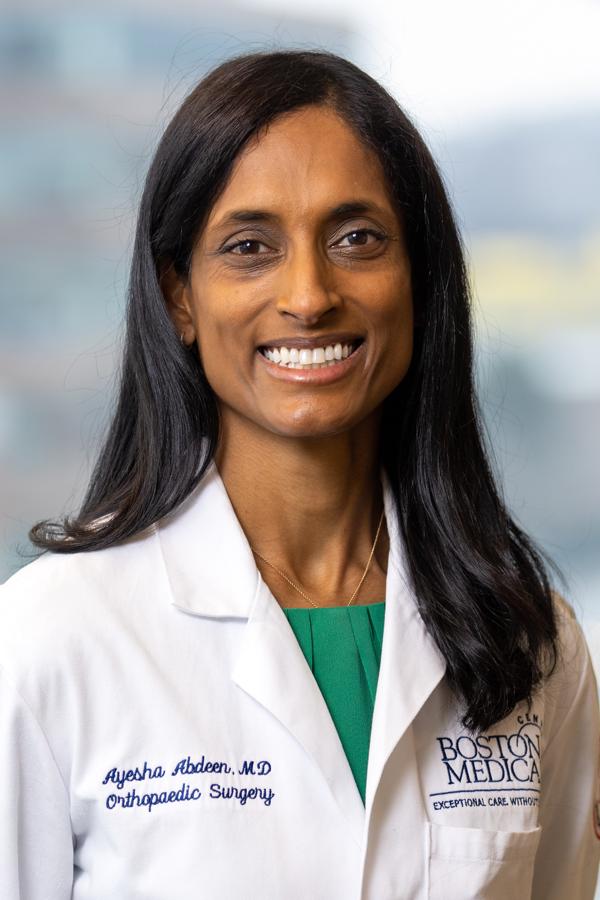
[00:01:11] Speaker B: I'm Aisha Abdeen. I'm an Orthopedic Surgeon at Boston Medical Center, Chief of the Division of Hip and Knee Arthroplasty and Associate professor of Orthopedic Surgery at Boston University.
[00:01:22] Speaker A: Go Terriers.
[00:01:23] Speaker B: That's right.
[00:01:25] Speaker A: This episode is brought to you by JB js, CME and Clinical Classroom. It is your absolute one stop shopping no matter where you are in the world for everything that you may need in CME and orthopedic education. No matter where you are in the learning spectrum. Just getting your shallowing in, wading in from the shallow end with orthopedics or or experienced master. Just looking to get CME credits or learning about what's new and exciting.
Get credit for reading JBGs. Get credit for listening to us. Get credit for what you do in your clinical practice through jbjs, CME and JBGS Clinical Classroom. If you don't know where to find it, jbjs.org is your one stop shopping.
Everything we're discussing here, including the proverbial bloodbath that was advertised again, are just the opinions of myself and or my co host. Not necessarily my co host. I don't want to get you in trouble.
And they do not reflect official policy or the impressions, stance or guidance from the Editor in Chief, the the other constituent editors of the other journals, the Board of Directors, the board of Trustees, or the folks who work at JBGS Corporate.
I think that covers everything that the lawyers want us to handle in advance.
If you can please give us a five star rating like us. Hit the subscribe button. Make sure you don't miss any issue of your cases on hold.
If you don't know where to find us, we're at Still Stitcher, Castos, Apple, Spotify, Amazon Podcasts, and if you don't have any of that, you can watch us on YouTube. And if you don't have that, go to jbgs.org and you can find it there.
So what's in the issue of the journal this month? We have at the top of the pile Shaping the Future of Orthopedics, a call to contribute to JBGS Special Issues.
That's, I think, always a welcome call when people are being asked to contribute to special issues. This is by the editor in chief, Dr. Bhandari, and is permanently free.
We have informed consent for Robotic Assisted Reverse Shoulder Arthroplasty, Framing the Conversation and Closing the Expectation Gap by Menendez.
Then there's Limb Rehabilitation and Functional Recovery following Cast Immobilization by Kamal. Also permanently free A System in Motion the Evolution of Orthopedic Care in Romania by Drago Sloveanu.
Then we have Principles of Level Selection for Instrumentation in Adult Cervical Spinal Deformity Surgery Guidelines for Treatment by Sardar.
Next up is Harnessing the Biologic Power of Bacteriophages to Improve the Treatment of Periprosthetic Joint Infection Barriers and Future Directions. This is by Adel Barry. It is the lead article for this issue and it is 30 days free.
And the last article on the top of the pile is high. Grade 3 column osteotomies are not interchangeable Schwab Grade 3 PSO vs Schwab Grade 5 VCR in treating severe kyphoscoliosis with an average nine year follow up. That is by Zhang and colleagues and it also comes with a comment we'll now move into the headlines. What's new and exciting in orthopedics this week?
My headline is the Orthopedic Surgeon An Overview of Key Concepts for Successful Recruitment and Effective Leadership. This is by Sobel and colleagues and it is a highlight of this issue.
Once again, we're taking a step to the side from the technical world of methodology and evidence. And we're covering what I think is another very important topic that many people are interested in.
And there are many, of course, across different environments, academic, hospital based private practice who would like to be a chair or even in a leadership role.
And I was very interested in gaining some insights on this front as well.
So I really jumped at the opportunity to Present this article, which is advertised as providing an overview of key concepts for successful recruitment and effective leadership.
There are several authors. We don't usually name the authors when we talk about the articles, other than the lead author, of course, but I think it is relevant here because we're talking about an overview of key concepts for successful recruitment.
But of the authors, I could only find that one, Dr. Cloisy has actually been a chairperson and they do have an individual who works for Whit Kiefer as the second author. So certainly I'm sure that they've been involved in recruitment and interview efforts and have Price seen it from that side. That said, after working through the five or so pages that represent the article, I was a little bit disappointed because I found that it was just very superficial.
It disappointed it didn't provide any concepts or insights that I think you couldn't intuit yourself if you just think about what are people looking for these days? And not even chairperson. Just it's superficial to the point where it could translate to any kind of leadership role. Division chief, fellowship director, CEO of a hospital, chief financial officer, mayor.
I mean, like the other than the fact that they were like mad living in orthopedic here and there, there was, there was nothing really about this that was unique or insightful when it comes to the challenges in our field. And so I, I did want. And again, you know, I'll recognize like someone could, you know, I said only Dr. Cloesy, but. And I've never been a chairperson. I get that. I am a vice chair currently, if that, if that makes a difference or that matters.
[00:07:43] Speaker B: That does.
[00:07:43] Speaker A: And I've been a fellowship director and I've been in other leadership roles. So I think there are some things that are important and that I think are confronting our field and would be a value add for the listeners. In addition to nothing that they're saying here is wrong. It's just that it left me wanting so much more because it was kind of like, well, I think everyone who's coming to this by and large, unless they're a complete novice, like already appreciates those things. So the first thing that really got me was they said that there's limited availability of high level leadership opportunities, so many have to wait until their children are of an adult age before applying.
And I don't know if that's a generational concept or something like that, but for me, these are not positions that you just like graduate from fellowship and you're like, yep, ready to be a chair now.
[00:08:41] Speaker B: But it also is not relevant to how old your kids are.
[00:08:44] Speaker A: Right.
[00:08:44] Speaker B: Because nowadays, who knows how old the person is and so. Or how many years of practice that you have? So I thought that was also a very odd metric of wait till your kids are out of the house before you can really commit to being a leader. Right.
And there are so many different.
[00:09:00] Speaker A: You know, with that in mind, I think we've covered this when we were talking about the fellowship match, and we covered this when we talked about research, how to conduct research. All of these things are so like you. If you have been in an environment where you've gone through a chair recruitment process, you've been in one environment where you've gone through a chair, they're so, so tailored and unique to each system.
I really don't think that there's very much translational capacity because I, I have people who are younger than me in training in, like, in my own residency program who are now chairs, and so they're behind me in training and they've become chairs.
If I, where I am today, said, oh, yeah, I want to be the chair at Harvard, they'd be like, you're way too young to be right.
[00:09:53] Speaker B: There's no way that you can.
[00:09:55] Speaker A: Yeah, context, 20 years like that, then you'll be right. Like, there's, there's certain expectations of, like, where you're supposed to be in your career or how old you're supposed to be. And yeah, it doesn't, you know, people are having kids at all sorts of different times in their lives. It doesn't factor into where your kids are, but it does factor into, like, how many years and experiences you've had behind you.
[00:10:17] Speaker B: Right.
[00:10:18] Speaker A: And in some institutions, it's like, well, if you haven't been a division chief and you haven't been on the orthopedic executive committee, there's no way we're going to look at you. And there are other places where it's like, well, yeah, they need that, plus they need 150 publications. Plus, we want to make sure that they would actually be able to be a full. We only want somebody who's going to be a full professor here. And there are some institutions where you're a full professor, where at other institutions you'd be an assistant professor. Like, they, they don't. They don't translate. They don't.
[00:10:52] Speaker B: That's right.
[00:10:53] Speaker A: Right.
So, I mean, I think the first thing is that most people, if you're looking for these opportunities, you're definitely looking out, you know, where you are right now. There's only one option there. If you're going to increase the cast, a wider net, you're gonna have to be ready to move and you're gonna have to do the homework in terms of what is the culture, what are the values, what, what are the expectations at that you gotta do a lot of homework. It's, it's a full time job. Getting the job is a full time job, I think. And, and they don't. They talk about it a lot that it's sort of centered on like you're trying to get the job at the place you already know. They talk a lot about like, it's crucial to understand the key stakeholders in one's institution in order to maximize one's relationships and to know how best to affect change.
Well, first off, like, there's no way you're going to know that going into a job if you're interviewing in LA and you're from New York. Right. Like, yeah.
Also, what if the institution doesn't want to affect change?
They might not want.
[00:11:56] Speaker B: We're good, right?
[00:11:57] Speaker A: Yeah, they might. They're like, you know, we're just trying to perpetuate the excellence that we just grow here on a daily basis. We want a, a constant gardener who's just going to curate and continue. And you're like, no, I'm a change agent, I'm a revolutionary. We're like, it's not going to work out.
There's just so much kind of corporate sort of superficial language speak.
Modern physician leaders need to be visionary, collaborative, strong financial acumen and operational skills required Skills include big picture, in quotes thinking, relational abilities to align and integrate teams, technical and tactical planning capabilities. And these are driven by the leader's strong communication skills. That didn't tell me anything. It was just like, it's just a bunch of keywords.
[00:12:44] Speaker B: Yeah. It almost seems like this is supposed to be a primer to what's coming next and then have a more in depth discussion or article on each one of these. Right. The communication. I'd be interested in hearing more about the finance aspect. And it seems like nowadays the leaders need to have a lot more background and understanding of how to balance the books. Right. And how it sort of fits into the greater scheme of the insurance policies and the ever changing sort of landscape there. You know, more of the financial background. I was hoping to get a little bit more out of that from this article, but it's almost like they need to write another one on those subtopics.
[00:13:20] Speaker A: Yeah.
And tactical planning capabilities and technical planning capabilities do not center on strong communication. Skills, those are, that's a separate skill set altogether.
I think the financial thing is also unique to the system. There have been several systems where I've worked where the chair had nothing to do with the finances. There's a separate operational parallel leadership structure that's sort of like the administrative ultra structure that just kind of exists.
They technically work for the chair but also they're sort of aligned and report to the, the system. Or you know they talk a lot about like the dean being the, the sort of the head or you know, sometimes it can be a CEO of a hospital again, you've seen one, you've seen one. I think more and more it's becoming common that like the clinical faculty is almost sort of, they don't really fall under the dean. The dean doesn't run the hospital. There are some institutions where that's an exception of course, but I'd say they're certainly not as common as they were 60 years ago or something like that. And, and nowadays there's a health system that has a, some type of vice president at the top and the chair might report to them. And also there might be a financial person that either the, the, the department manager or the chief financial officer for the department, they report to that person too.
And sometimes like the financial people are managing multiple departments so they're almost like on a separate layer on top. Yes, the finances are important, but that's like a full time job in and of itself and would totally consume what the day to day clinical management of the team.
And the department is really sort of being the role that only a chair could do. You, you can find other people who can do the financial stuff that right Then they talk about these training opportunities like the AOA Resident Leadership Forum. I mean if you did the resident leadership forum 30 years before you become a chair, I don't really know how much it's, it's helping you or the Emerging Leaders Forum or the apex leadership. I get this is like in the AOA section so maybe they have to you know, advertise for what the AOA offers. But like, you know, then they talk about getting additional credentials. I think credentials can give you a certain type of standing if they're looking for that type of person. Like you didn't we talked about this before with some of like the soft section on additional degrees that you can get. Like if you're into getting an MBA because you're into that business aspect of medicine, then get an mba. Don't get an MBA because you think it's going to make you a chair.
Because what if they don't really respect where you got your MBA from? Or what if you don't really, you know, you got your MBA, were in medical school and it's 30 years later and they're like nothing that you learned back then, if you even remember it, is even applicable to the current management. Right. So like, at the end of the day, I will say this. What I think are the challenges that confront chairs in the current environment, I think are one really the competing paradigm of who is it that you work for? Do you work for the faculty or do you work for the CEO of the hospital or the dean?
And because there are competing pressures there and regardless of who you feel you work for, it's going to have to be a balance. It can't be one all one or the other.
And you kind of have to be an honest broker, sort of representing your constituency, which is your faculty and your department, and then also implementing the clinical, financial, academic, research based realities that exist in today's climate. I think the other big challenge that I would say, you know, is a, is an important thing, is for the chairperson to understand how are you going to manage your own clinical or research or academic responsibilities against being the chair?
Because I think that a lot of chairs who are not successful that I have seen or you know, have commiserated with colleagues about, they, they come in and they're like, yeah, I'm used to, you know, having like 70 clinical practice, 30 research or 20 research, 10 something to that effect. I'm gonna maintain all that and then I'll just do the, you know, so you can't ever find them. Oh, we're, I, I need the chair for something. Oh, they're in the. Or like you can't bother them. They're in their operating like I think in today's day and age, you really have to say this is what I'm gonna sacrifice to, to step into what is really supposed to be in today's day and age. I think the successful chairs are really, it's a servant leader paradigm that, that, that's necessary. The days of like you can't go into the chair's office, you know, if you even look at them like they'll just yell at you and you know, put you in your place and ruin your career. And it's just, we're just not that that historical time frame is long gone and if nobody can find you, if you're just, it's just, it just breeds resentment and disgruntled faculty or people Start leaving. I mean, that's not going to work out well.
And then if you get a bad reputation, it's hard to recruit people and you don't have the finances to do it. And it just becomes this negative feedback loop that leads into a death spiral. And then the last thing that I would say is that to lead and inspire, you have to be where your faculty is. Like, they have to see. And not only see, but also that the chair is sharing in the everyday challenges. And that's where I think a lot of chairs are. Like, well, yeah, I'm doing that because I'm in the or, but you can't do it.
Yes, do some. But you can't do it so much that it's just like the chair piece is the side job. And just what you were doing before as a clinician is the. I don't know if you have a different.
[00:20:06] Speaker B: No, I agree. So I would say that they can't be pure leadership. Right. They have to have a foot in the trench.
[00:20:12] Speaker A: Yeah.
[00:20:13] Speaker B: Periodically. So they really are living our lives and can commiserate and can understand. But then also that they're devoted to this. And that's always been my experience with excellent chairs, is that they're devoted to the chairmanship. Right. Or the chairpersonship, I should say, rather than, as you said, their own career trajectory. They've achieved all of that and now they're there for the department. Right.
That's a key fundamental component.
[00:20:40] Speaker A: And learning from the faculty, engaging with the faculty, knowing what the faculty want.
Each individual faculty, not the faculty as a whole, but like, each faculty member is a person.
Where. Where are you meeting with them regularly? Not, not saying, like, oh, it's an open door. So they'll just come and meet with me if they want to. And if they don't, well, I guess, you know, they don't need me. Right. Like, no, doesn't work that way. It's, you know, we're having meetings where. Where are your goals? What are your challenges? How can we help? And the answer can't always be, well, just we can't do. That's just not. That's unrealistic. Like, sure, I'm sure some faculty have unrealistic expectations and asks, but certainly we can come to a happy medium goal for everyone in terms of what's negotiable and what's doable in the system. I think that there's also where chairs come in and whether it's they're hired by the people that they're working for, they're not really hired by the faculty in most situations. So naturally, there's a power dynamic that's an imbalance there and also a moral hazard in some respects. But it has to be worked against proactively and modified. So that you're saying, yeah, this is what the system needs us to do as a department or as a faculty. But at the same time, the trade off is that I'm going to help you get to where you want to be in the next phase of your career, whatever that is. And I have seen that happen so infrequently that, that it's like. That's what I would hope. Would. Would be in. In articles that you read. So it could maybe happen more often.
[00:22:21] Speaker B: Yeah, agree.
[00:22:23] Speaker A: All right, so moving into your headline, Glucocorticoid enhanced fascial plane and peripheral nerve blocks versus Periarticular and local infiltration analgesia. Internal hip arthroplasty. A prospective randomized controlled trial by Lee and colleagues with a comment infographic. And it's 30 days free. Okay.
[00:22:46] Speaker B: It's got the trifecta.
So this paper was published by the Anesthesiology and Orthopedic department at Yale in conjunction with the Department of Orthopedics at Duke. They aim to compare the anterior quadratus lumborum block, also known as the aqlb, plus a lateral femoral cutaneous nerve block, with periarticular and local infiltration analgesia in total hip arthroplasty. Both modalities were using dual corticosteroids, so they used a hydrophilic dexamethasone sodium phosphate, which they called dex, and a lipophilic methylprednisolone acetate. So that was injected into both the local periarticular as well as the blocks. There has been a movement in total joint arthroplasty toward opioid sparing techniques. The ideal strategy for analgesia remains sort of elusive. Current guidelines recommend periarticular and local infiltration, also known as palia. Palia. So they used in this paper. Conventional nerve blocks are not as popular in the hip due to motor weakness. And so there are emerging blocks such as the anterior quadratus lumborum that provide analgesia without the quadriceps weakness. Typical blocks wear off at 24 hours or earlier and is now known that if you add steroid to the block, it can prolong its effects. And that was the premise here. So adding a hydrophilic dexamethasone and a lipophilic methylprednisolone can prolong the single injection blocks by up to 48 or 72 hours, which of course is favorable now as we're sending patients home earlier after total joint arthroplasty within the first 23 hours.
So the study was a prospective RCT to compare these blocks using 0.2% rapivacaine combined with the hydrophilic dexamethasone and the lipophilic methylpraznisolone. The exclusion criteria were patients less than 18 years old, surgical indication other than osteoarthritis, opioid use disorder, uncontrolled diabetes, chronic pain meds on opioids or gabapentinoids. The patients were randomized to receive either the blocks, which is the AQLB plus the lateral frontal cutaneous nerve block preoperatively administered with ultrasound guidance by the anesthesia team or the palia which was given the periarticular infiltration given given by the surgeon in the periarticular deep space deep to the TFL for a direct anterior approach or deep to the IT band for the posterior approach and then local infiltration superficial to the fascia.
The total local and dexamethasone and methylprednisolone injected was equivalent in both groups. The anesthesia was otherwise standardized either to a spinal with consistent dosing and sedation and the post op analgesia was with acetaminophen, celecoxib and PRN oxycodone. The primary outcome measure was opioid consumption on post op day one and secondary outcomes were opioid consumption post op day two, the Brief pain inventory, pain severity on post op day one and weeks two and active measure for post acute care on post op day 0 through 3. Length of stay and fasting, serum glucose and white cell counts were measured and the PROMIS score was measured up to one year postoperatively. Since we kind of expect the nerve block and the local anesthetic to have prolonged effects beyond 72 hours, I'm not sure how effective or useful the one year outcome measures are.
They found that there was no difference in opioid consumption on post op day one between the groups nor on post op day two and the pain severity scores were not different at post op day one or at two weeks.
There was a slightly higher fasting blood glucose on Post OP Day 1 in the local infiltration periarticular block group and there was no difference in length of stay or discharge disposition. There were no adverse events associated with either of the techniques and there were no infections or wound Complications.
My impression, it's not really clear that the two groups were entirely comparable based on their baseline responses to pain.
They didn't see state that the patients were opioid naive specifically as an inclusion criteria.
You know, chronic opioid use was used as an exclusion, but we are uncertain whether patients used any type of opioid pre op. Right. So it would have been helpful to know the milliequivalents of morphine that patients were taking up to 30 days before or if they were just opioid naive.
Also pain syndrome, such as central sensitization syndrome or any type of pain symptoms syndrome in general, it was not excluded, for which I think they could have added that in there fibromyalgia and the like any type of pain syndromes in general. I mean, the authors made a good point that the lack of significant difference in opioid consumption may just reflect the analgesia equivalence versus the inherent difficult of demonstrating superiority in the setting of successful multimodal analgesia. Right. So we might be so successful in with our use of spinals, with our use of PERI operative NSAIDs that there's a ceiling effect and we can't really tell the differences and the nuances between these two techniques. That probably is the case.
Generally speaking, you know, these findings support the use of just local infiltration and periarticular injections over the use of these specialized blocks. These blocks do require specialized expertise from the anesthesiologist. Not all have this skill set.
And the local anesthetic is easily injected by the surgeon at the end of the case. You know, and there probably is an additional cost to having, you know, the expertise as well as the image guided blocks done preoperatively. But what does remain unknown. See, I wouldn't want to write off these blocks altogether because, you know, we don't know how these blocks will affect people with opioid misuse disorder or with, you know, controlled substance use disorder, because they did exclude those groups. These clinically are the groups that we find to be helpful from a clinical standpoint. Those are our indications for using these blocks in our institution and the exception where we do. I think it would be interesting to see a takeoff study of this in patients that are higher risk for having postoperative poor analgesia control to use these specialized blocks in those instances.
The other thing that I thought was interesting is the first word of the title is Glucocorticoid enhanced by fascial plane. And so to really determine the effect of the glucocorticoids, we really need a randomization that's four way, right? We need to have the glucocorticoid in the periarticular block and a periarticular block without the glucocorticoid. Likewise for the, you know, the lumbar block as well as the lateral femoral cutaneous block. Those should be done with and without. And if it was a four way randomization, we could really speak to the effect of the glucocorticoid.
And so I don't think it's definitive that we necessarily need to be using that or that this paper determines that the steroid was necessarily beneficial.
So, you know, a lot of us in the total joint world are using systemic steroids. You know, we've been shown that there's multiple data to show that it doesn't increase infection risk in patients, generally speaking, particularly those that don't have uncontrolled diabetes. And we use it systemically to control for pain and nausea and vomiting postoperatively. So we may remove that effect by giving it in the local and in the block itself. So a lot of unanswered questions there and I think that would be sort of a good topic for future investigation. What are your thoughts, Andrew?
[00:30:14] Speaker A: Yes, a great many good points that you raised. In the olden times, we called this a Sopranos paradigm where there's like this huge buildup. We're gonna do a randomized study. We're gonna have this group and that group and they're gonna be. And we'll get all these different treatment protocols. And then in the end they're like, yeah, it didn't work. But we don't really know what, why.
There are lots of different reasons.
And it becomes this like, you know, at the end of the day, the conclusion is there was no significant difference in daily opioid consumption, pain score, functional recovery. So it's like, hey, did you ever think about doing this newfangled, like excite? No, I didn't. Oh, well, it doesn't really do anything like.
And I don't. I think some of their suppositions, while plausible, don't exactly line up with the evidence.
So, you know, the first thing is like when, when you don't have a difference, you say, okay, let's, let's dissect what we're seeing here in terms of the effect size and that that the effect size for the two groups, the Omni. The primary outcome was 29.84 or essentially 30 in the AQL B LF CMB group. And then in the Paleo group it was 30.5 or 31.
And then the IQR was if we're rounding 18 and 18 and 39 and 42, those are sufficiently close enough to say that like. Yeah, it's, it's just this isn't effective and, and I thought it was really kind of a stretch for them to be like the problem is, is that we're so good with the multimodal at controlling pain that you can't even see how good this stuff is. And it's like, well, if we're so good with our what exists already, why do we need something else? That's my question.
But, but I think and again it's kind of a misstep. It's like the population that you're trying to use this on is maybe not the one that could benefit it from the most.
And the findings could be different in a population that is on chronic opioids or has like a history of opioid use disorder. You know, that are a higher risk population may have difficult. Right. Why aren't you studying that in them?
[00:32:39] Speaker B: Exactly, yeah.
[00:32:41] Speaker A: Moving on to the your cases on hold featurette. This is predictors of loss to long term follow up after shoulder surgery. It is by Sewell and colleagues with a visual summary.
So this study is operating on the premise that we don't really understand why patients are lost to follow up after shoulder surgery. The introduction is a discourse takes you through a narrative around various orthopedic studies that have reported follow up attrition rates up to 25% within the first three years after shoulder surgery. Patients with younger age, insurance status, socioeconomic disadvantage. These are all potentially associated with reduced follow up. It is actually a pretty well covered topic. The authors want to bring evidence from what is generally considered one of the least informative sectors, which would be a single orthopedic surgeon, single practice perspective, however.
And then they hypothesized without substantiation or elaboration, although I assume it it's based on the prior data that has already said this as they pointed out that older patients would have better follow up and then instability surgery would be associated with lower follow up.
Okay, but why, why would instability surgery. It's not instability surgery in and of itself. It's probably because I would wager that that occurs in younger patients. So it's just the converse of what you said about the older patients. So the first thing is that you know what they're talking about. Age, surgery type, the socioeconomic status. You need to if you're Wanting to look at how these things work with each other. You need to be looking at interactions.
And they don't even have really the numbers to support doing that in many respects, because this is a single orthopedic surgeon, single practice study.
They had 11, 10 patients. Sounds like a lot of patients up front, but as we've said before, it's always amazing how what seems like a waterfall of patients, once you start breaking things down, turns into just little rivulets.
Yeah. So they lost the plot for me as right here, like second paragraph of the methods.
So at two years postoperatively, they had 10, 28 patients that met the final inclusion criteria.
And these patients were contacted through a multimodal outreach approach. The surgeon initially reached out by telephone, text and email, and then they sent automated messages through the electronic medical record system. And follow up was considered complete if the patient responded by any method. So this is not really the title shouldn't be, as far as I'm concerned, predictors of loss to long term follow up after shoulder surgery. It should be predictors of patients who bother to respond to email and phone call requests from an office two years after surgery. Like, because that, that's what, what it is. When you're talking about patients who are lost to follow up. It's. It's one of two things. One in a clinical sense, one is you say like you might after total joint arthroplasty or shoulder surgery or spine surgery, to really say this patient has had a satisfactory outcome. We will not discharge you from our practice until a certain time point. Right. And sometimes you don't ever. I know that the custom of many total joint surgeons is they keep seeing the patient's.
[00:36:35] Speaker B: Right.
[00:36:36] Speaker A: But whatever it is, after one year or after two years, One year. It tends to be for like fusions, two years is the standard expected in the literature for total joint archipelasty. You're going to say you have reached maximal medical improvement. The surgery has been a successful outcome. It's unlikely to change, barring something catastrophic. So you are good to go.
So lost to follow up occurs when the patient just drop. You can't put your hands on them sometime before whatever time point that is the other lost. A follow up is in a true prospective study in RCT or something. And you tell the patient up front, we're doing this study, we're doing this trial. You will come in at 1, 3, 6, 9 and 12 months and you will complete this and this and this. And they say, okay, I'm going to do it. And then after three months, you don't see them anymore. That's, that's the real loss to follow up when you're talking about research. The other is a conventional loss to follow up. That's problematic when you're trying to do retrospective research. But when it's like, we didn't do anything with these patients for how, you know, it was just standard clinical practice and then, oh, at two years we're going to reach out to everybody and say if you don't bother to follow up, that means you're lost to follow up. Whether they responded or they didn't respond to me, I don't, I think has a, has a value attached to it in some way, but it isn't actually lost to follow up in any of the two ways that matter to us and in the research community.
So with that as the premise, we're going to move into. They said that the treating surgeon's typical protocol was visits at 2, 6 and 12 weeks. So just up to 3 months and then additional visits if needed.
So they could have told you, at 12 weeks, yeah, you're good to go. And now all of a sudden, two years later, they're like, hey, get back in touch with us. And you're like, no, they told me I was good to go. I'm. Why, why would I do that? The same seed loss to follow up. No, that's not lost to follow up. You told the patient they were good. Like then if they underwent arthroplasty, there's a separate time point, the one year visit.
But however they define loss to follow up, we then have age, sex, race, ethnicity, bmi, asa, comorbidity score, behavioral factors, alcohol use, smoking, surgical indications, socioeconomic factors, all of these. They collected the data and wanted to look at this in an analysis. The analytic approach is they're using layered regression with a p value of less than 0.2 as a way to include in the multi variable testing. The avid listeners will know that is definitely not a best practice. And then they say, they also examine correlations among remaining predictors and anything that they thought was correlated, they, they took that out as well to create a parsimonious model. But you don't, you're not asking for a parsimonious model based on their premises. You're asking for what factors actually play into. So parsimonious model isn't useful here. A parsimonious model would be useful if you're trying to say, you know, which among these patients is what's the minimum data points I need to collect, to figure out if they're going to be at low risk or high risk for not responding to an email I send them two years from now asking them to follow up with me when I told them sometime before that that they didn't need to follow up anymore. The population, incredibly limited clinical variation here. 94% white only, only six African American or black patients, only eight Asian patients. I mean this is very much shaped by the place of the practice and the type of practice.
Then the comorbidities. I mean it is shoulder surgery and it's a heterogeneous shoulder surgery, but still comorbidities pretty low at just 1.5 BMI was 29.
Very limited numbers of smokers, which, you know, in today's day and age, you're probably not surprised. About 63% of those who followed up and 64% of those lost to follow up were primary private insurance. When they show you Table 1 which has like the breakdown by total follow up and loss to follow up, but Table 2 only shows you the follow up and loss of follow up stops giving you the total holistic. But it's somewhere around 63% of the population we would say would be insured. At the end of the day they came to the conclusion that younger age, missing VAS pain scores, those two things were the factors that predicted loss to follow up. And then current alcohol use was associated with lower odds of loss to follow up.
[00:41:17] Speaker B: That was so counterintuitive.
[00:41:20] Speaker A: Yeah, it is counterintuitive, but they have an explanation.
Their explanation is that it's a phenomenon referred to as the sick quitter effect, which I don't think actually applies here. And they say that alcohol use may serve as a preference proxy for better overall health.
[00:41:38] Speaker B: Or this is where they lost me.
[00:41:40] Speaker A: Greater familiarity with the health care system.
No, what I would say this is reflective of is that you have a unique population here and this is a non informative factor that you can't make heads or tails of that it happened to be statistically significant due to chance or artifacts in your model. And you could have just said that and let it go. But the sick quitter effect means that the sicker patients are leaving your practice but maintaining that the heavier alcohol use is reflective of better health.
[00:42:13] Speaker B: Yeah, very flawed.
[00:42:14] Speaker A: I don't think that holds that.
[00:42:17] Speaker B: Yeah, flawed argument. And also I don't know how they defined the drinking. Right. So they said current drinkers versus former drinkers. Is that comparing current drinkers versus like recovering alcoholics?
And where were the teetotalers in this, right? Like, yeah. And did they have alcohol misuse disorder or they're just drinking moderately? They seem to assume it was a moderate alcohol intake, but I'm not sure how they came to that conclusion. So I thought that was very interesting.
[00:42:45] Speaker A: Where they really actually hit on things and then, you know, they say it. They say the quiet part out loud and then they move on. But where they really hit on things and what is like, probably the biggest confounder for this type of study, the way they went about it, is that in a large health system, patients are getting inundated with automated texts, telephone messages, constant reminders through if they're plugged in with the gateway, not just from the health system, but from other doctors, from your optometrist, from your dentist, from the people that want you to vote, from, like whatever inundated with, with electronic messaging that they're just, they just have a fatigue and they're like, I'm not doing any of that unless I'm really motivated to do it. And that's really what it comes down to, is that when we're talking about studies, you know, why it would be great if you could just pull your last 1000 cases and develop some type of really robust research out of it, the odds are you're not going to be able to. For the reasons that I articulated earlier. If you want patients to follow up, you have to make a concerted effort to ensure they follow up. You have to tell them up front, these are the points.
This is how we're going to get in touch with you. If you don't come in, we're going to send somebody to your house, we're going to have someone else. You know, do you have a proxy that could fill something out for you if you're not feeling up to it? I mean, when we do studies where we are really needing to get data from patient at every single time point, the time points are precious. And there's a finite time. You know, it's typically, this is the data point. We got to start two weeks before, two weeks after, or we miss it. We have the research assistant, we have the research coordinator. We're saying, what can we do? Can we give you $25 gift card? Like, right. There are all of these kinds of things that you do to make sure that you have very robust data completion. The problem with patients in my practice, maybe you see it in yours, is that they get these iPads that they give them at the front desk, that they're like it says here, fill this out. Your doctor Wants you to. The patients hate it.
They didn't agree to it beforehand. It's different when they know that it's coming and they say, you asked me these questions last time I filled this out already. Nothing's changed. I don't. Do I have to do it again? Like, it's, it's. The most complaints that I get on a daily basis are about the iPad regularly. And it's the same thing with this. If you're calling them out of the blue two months, two years later saying, hey, can you get back in touch with us, let us know how you did.
Yes, some will do it and some won't. They didn't know that they were supposed to do that beforehand, so they're not invested in it. That's really where this doesn't provide anything. It doesn't tell us anything that we didn't already know. The signals, by and large, with the exception of the alcohol thing, which I think is interpreted incorrectly, are the same that they said in the introduction based on prior other studies had shown.
So I don't see how this is really moving things forward. And I think it's constructed in a way that the way they went about it introduced a great deal of confounding as well.
[00:45:49] Speaker B: Yeah, the other interesting thing was, you know, older patients were associated with increased follow up. Younger were not. But that was a very narrow window. It was a mean of 49 years old and a mean of 53. Like if you were doing a survey, that's the same box.
[00:46:02] Speaker A: Right?
[00:46:03] Speaker B: You know, they say this age, if you're 45 to 55, I'm in that box. Like, you know what I mean? That's my box. And so I'm equally likely to be lost to follow up as to not be lost to follow up. So I thought that was interesting. They didn't have any extremes of age. And I'm sure you'd find more of a variation with those extremes of age, which of course is inherent to the population and that this was.
[00:46:24] Speaker A: I'm in that box too, and I'm telling you right now, I'm not filling out anything.
[00:46:32] Speaker B: Turn off all the notifications.
[00:46:35] Speaker A: All right, so moving on to the honorable mentions. First up is technology assistance mitigates the volume dependent risk of hip dislocation following total hip arthroplasty by IER and colleagues with a comment and an infographic. I actually thought this study was good. This was a good one. I really like this one. I thought it is a really unique example of where, like, big data, you can only do this kind of study with big data and they approached it in such a way that it provides some really I think useful. And you don't, you know, there's plenty of big data studies that just like did this show us anything we didn't already know? No, it's just kind of like set aside. But, but here I really think they did something very well, very elegantly and with quality results and impact.
So the premise is robotic assistance and computer navigation may mitigate volume dependent risk of instability.
So they wanted to compare dislocation rates between lower volume surgeons per performing technology assisted total hip arthroplasty and higher volume surgeons who are using just conventional instrumentation. And this really has I think impact in terms of lower access community hospitals where the volume is lower.
Therefore the surgeons are not doing it as often. If you can get those patients similar outcomes so they don't have to travel as far because you're using robot assistance technology assistance, it is such a proof of a value add. I mean I think there's so many levels that are cross cutting in this situation where there's high levels of applicability. For this study they use premier health care surgeons with less than 10% technology use were the conventional group. Greater than 90% technology use were the total rather technology assisted group. And they further divided based on volumes. With a previously validated threshold of 109 cases per year. They had close to 670,000 patients undergoing total hip arthroplasty.
They had about 5,400 a shade over treated with low volume technology assist and 191,000 treated with the high volume and the low volume technology assist achieved a similar rate of dislocation.
After controlling for confounders, the risk of dislocation remained comparable with an adjusted odds of just 1.06. So very close to the null 1.0 with a pretty tight confidence window. So their conclusion, computer navigation and robotic assistance may attenuate the association between case volume and dislocation risk. Really well done. I applaud the efforts of his team from the University of South Carolina. I'm Southern California, sorry. Go Trojans. The prevalence of pediatric septic arthritis of the hip with concomitant osteomyelitis. A retrospective study of 58 consecutive cases investigated using MRI. This is by Khan and colleagues with a comment highlight and 30 days free.
So they looked at retrospectively demographic, clinical, microbiological and radiographic data of just 58 children treated for septic arthritis of the hip who also underwent systematic MRI between 2000 and 2025 it's a pretty small number. And they categorized that small number into two groups. Isolated septic arthritis and and septic arthritis with osteomyelitis.
And by using MRI they found osteomyelitis in 43%.
That's 25 of the 58 patients.
Radiographs alone only detected it in 16%. I don't think the fact that MRI providing greater detail in terms of things like osteomyelitis that may be developing early on in the pathologic process that it has higher sensitivity is is a surprise. They looked at demographic clinical inflammatory parameters. They were statistically similar between the groups. Kingella Kingay was the most commonly identified pathogen. Staph Aureus and Strep species were more frequent associated with the need for repeat surgery. Their conclusion? Osteomyelitis was not associated with worse outcomes, suggesting that factors related to the microorganism profile or virulence must contribute to substantially increased disease severity. And the systematic use of MRI showed osteomyelitis in 40% of cases of pediatric septic arthritis. That's all we have for this episode.
Thanks for sticking with us through this.
Scream 3 the JBJS edition.
We'll see what spooky tricks and treats you have in the next episode where we'll be even closer to Halloween. Maybe it'll be even worse. Maybe it'll be better. I don't know. Anyway, we're about out of time. Thanks for listening and stay tuned to the next episode.
[00:51:27] Speaker B: Thanks everyone.