Episode Transcript
[00:00:03] Speaker A: Welcome to your Cases on Hold, a JBJS podcast hosted by Antonia Chen and Andrew Stonefield.
[00:00:10] Speaker B: Here we discuss the science of each issue of JBJS with an additional dose of entertainment and pop culture.
[00:00:17] Speaker A: Take us with you in the gym, on the commute, or most certainly whenever your case is on.
Welcome back everyone to your cases on hold, episode 99. We are one away from the 100th episode of this podcast series.
Thanks to all of you who have been listening to us from the start and to those who have just joined recently and may be joining even for the first time. Now you are here to hear about the the latest, greatest, best and brightest in science and the orthopedic field, including now also humanities and global orthopedic health policy insights.
There's a lot to look forward to in this and further issues of the Journal and episodes of your Cases on Hold. If you are listening on the day we drop it is February 3rd for the February 4th issue of the Journal.
I am Andrew Schoenfeld, Associate Editor for Methods at jbjs and I have, as.
[00:01:30] Speaker B: Always, Executive Editor at jbjs Antonia Chen, Arthroplasty Surgeon, which I appreciate because we like the topics of arthroplasty.
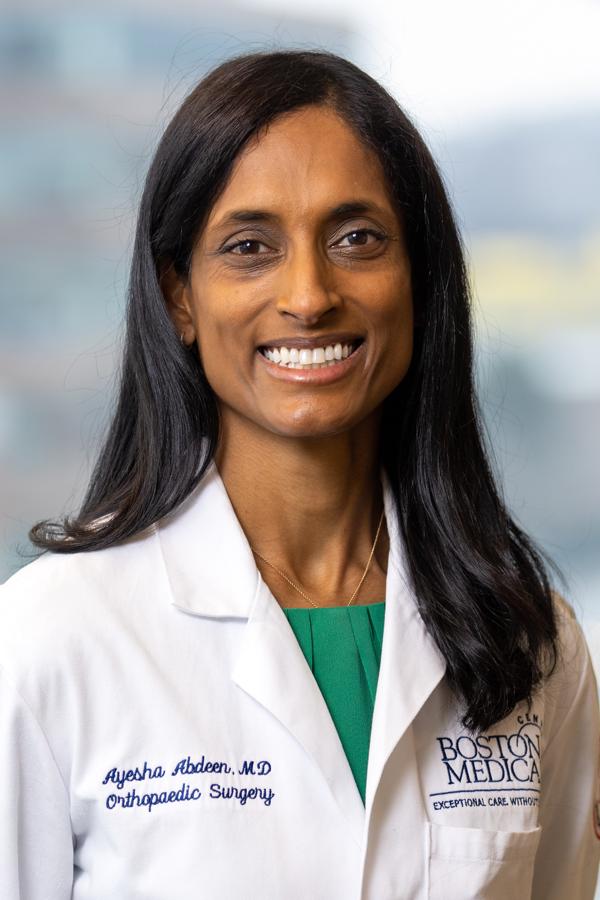
[00:01:41] Speaker C: Yeah, no worries. I'm Aisha Abdeen Guest today from Boston Medical Center, Arthroplasty Surgeon as well.
[00:01:49] Speaker A: Fantastic. This episode of your Cases on Hold is brought to you by the Miller Review Course. We're getting into the late winter. Spring is right around the corner and with that is the testing cycle Maintenance of Certification Web Based Longitudinal Assessment Part 1 of the Board Certification Examination.
So these are all things that the Miller Review Course can help you with no matter what stage you are in your career.
So definitely sign up for that. If you are doing your Part one of the Orthopedic Board Assessment Examination, I think it's imperative. It's a must do for others. I think it can help you in a lot of different ways, so do check that out. Don't delay in signing up.
As always, the opinions that you hear here are our own and not those of the editorial board at jbjs, the Editor in chief, the editors of the other constituent journals, board of trustees, etc. Etc.
With that out of the way, let's get into the meat of this issue.
Top of the pile we have chitranjan Singh Ranawat, M.D. 1935-2025. This is an obit and is permanently free.
Then we have Combining ACL reconstruction with lateral extra Articular Tenodesis Reduces long term osteoarthritis Risk versus isolated ACL reconstruction A systematic review and meta analysis by Gikekas with a commentary the management of neurological injuries following Total Hip arthroplasty by Kayani the weight of the lead apron by Upal permanently free the cartilage conundrum by Upal permanently free Managing Expertise Bias in Randomized Trials do we need a better approach by Regazoni and colleagues? And then we have Evaluating Orthopedic Research Funding like a Venture Capitalist by o' Hara and colleagues. Very interesting read. I did check that out prior to our episode today. What's important? First things first in medical student research by Disser and colleagues and then what's new in Pediatric orthopedics by Hardisty and this is also permanently free.
We're now moving into the headlines. What's new and exciting in orthopedics? This week my article is Risk Factors for Nonunion Following Lateral Locked Plating of Distal Femoral Fractures A bayesian analysis of 560 patients by Wagner and colleagues. And this is permanently free.
Now this is just proof to those who are avid listeners. In the past, obviously Dr. Chen and I both used to work at the Mass General Brigham Harvard system.
We have covered a variety of articles over the years that have been performed by colleagues and some have been our own research. But we're not fully blinded to the articles that are selected for presentation. But I would say it's like a partial blinding in some respects.
And this article was selected for presentation and when I started going through it I realized that these are colleagues and in some respects co authors who I've worked with on several different a lot of intersections here for people who are on the author order list. So this is work that was done out of the Mass General Brigham System, Massachusetts General Hospital and Brigham and Women's Hospital.
And as you'll see, the fact that these are colleagues or you know, previous co authors or people that I've worked with will not change the assessment and discussion points that I have for this particular paper.
Let's get into it here. The study is on distal femur fractures.
The motivating hypothesis here is that or the motivating statement is that previous studies have identified higher bmi, open fractures, fracture comminution, a number of different factors as risk factors for nonunion.
They've also comment that coronal plane mal reduction is a surgeon controlled variable that has also been maintained to be associated with non union.
And then they start talking about the current research relies on frequentist statistics and they want to do a Bayesian analysis.
Now, as avid listeners of the podcast will know, I don't generally recommend the motivational statement for your work to be focused on the analytic approach, because the reality is that you can apply any kind of analytic technique to a body of data. It does not mean that it's going to result in usable or actionable information.
And that's kind of the concern here where the, the main focus of the introduction when they're trying to bring you into what are we doing here? It's, we're applying a statistical technique that hasn't been used before or hasn't been used in this particular context.
I just see that as problematic. I think that the best way to come to a paper is to say we have a robust data set or body of data acquired. However, which way you want to acquire it, that's going to answer a salient research question. And then it's through the prism of your analytic approach that you're coming to an actionable, applicable, translatable, generalizable result.
Not, oh, this has never been done before using this, you know, relatively obscure or highly specialized statistical technique. That's, that's almost like, you know, a shell game where they're trying to, why wow you with sleight of hand?
And, you know, sometimes, certainly, you know, when, when the analytic approach is somewhat unique or somewhat different, you know, you can get that work across the finish line into post publication.
And that is kind of the case here. So, you know, I don't think that, that this article should be used by others as a primer or some type of template for, okay, we're going to come with a research question and use this type of analytic approach and it's going to get accepted at jbjs because I think odds are it would not.
They're using this Bayesian analytic approach, which, just like propensity score matching, lends itself to causal inference questions.
This group received treatment different from that group, and it's a retrospective study. So we're going to use a causal inference technique to help adjust for that or account for that. Bayesian analysis typically work particularly well where it's posterior means are pretest probabilities.
So they kind of tend to lend themselves to diagnostic questions. Because what a Bayesian analysis is doing is it's accounting for you thought something different about this patient, so you then did something different because you thought something different, which maybe is hard to unpack. But as an example, like, you think a patient has an infection, so you draw infection labs. A patient you don't think has an infection you don't draw infection labs on them. That patient may still have an infection. It might be a very low likelihood of it, but they might still have one. It could be exceedingly low, but they might still have one. You won't ever know that because you didn't draw labs on that patient. But the patient that you did draw labs on, the mere fact that you drew the labs is actually increasing the likelihood that you're going to detect an infection.
That's what Bayesian analysis typically account for.
And I guess the, the authors, although they do not come right out and say this or make the case in print, I could rationalize that they're saying, well, the patients that have a higher risk of non union at baseline may be getting differential treatment. And that may be true, but I think you could handle it better and more discreetly using a causal inference technique in that regard than using a Bayesian analysis.
And the additional problems is that not only are they using the Bayesian technique, but they have a lot of other, like, unconventional definitions that they're using up front. So they're using these instead of like confidence intervals, the classic 95% confidence interval. They're using credible intervals, CRI instead of CI, and they have some different baseline thresholds for inclusion in layered testing, which again, all of these approaches can color your findings.
And it certainly is a little bit unconventional. The conventional approach would be to do a regression analysis. You're using confidence intervals when you're using a Bayesian analysis. Yes, you can use credibility intervals, but they do the Bayesian analysis and then they do a logistic regression analysis which they say will aid in the interpretation of the Bayesian analysis. Now, I don't know if, you know, maybe through the review process I could rationalize. A reviewer was like, I want to see the logistic regression analysis first. And so they tacked it on the end.
Sometimes you kind of have to go through those machinations to get a paper accepted, but you know, they really want to be looking at. It's essentially a risk factor analysis at the end of the day, risk factors for the need for further surgery, of which they only had 54 cases.
And they include a lot of variables, age, sex, race, ethnicity, diabetes, tobacco use, obesity, ASA metaphysical fracture pattern based on the AOA classification, intra articular fracture, ipsilateral implants, Anderson classification, associated vascular injury.
They also collect data from almost over 20 years, January 2006 to June 2024.
And they're not accounting for secular trends in their analytic approach.
Then they also are only using, I think, the Base case was like three month follow up, which seems a little bit permissive in terms of really defining the outcomes of interest. So then they have what they call sensitivity analyses which are greater than 5.5 months of follow up. And then a second one that's looking at screw densities which may be somewhat less informative.
But even defining the outcome of interest here, there's some problems with that.
So ultimately they're looking at 560 patients in total collected over almost 20 years.
They only have 54 patients with the outcome of interest reoperation to promote healing.
So that's also another problem.
And they run these layered analyses and the credibility intervals are considered significant. If similar to conventional confidence intervals, it does not include the null, which is zero for differences and one for ratios. So they are presenting odds ratios here. And there are several odds ratios in their multiple variable analysis that they're calling very strong evidence where the credibility interval overlaps one. So I don't, I don't understand how that's really viable in this context. The ones that if we use the, the adhere to the methodologic guideline, medial cortical comminution, coronal plane, malalignment, increased odds of non union or lower odds of non union with a screw density of a certain amount, those ones, there's about three or four that hold up using the conventional definition for significance in this context.
The premise is wanting to apply an unusual statistical approach.
And it's other than that a conventional risk factors for outcome X and procedure Y kind of trope. They have some moving goalposts in terms of how they're defining their outcomes and they have a very limited number of outcomes.
So at the end of the day, you know, I think the utility of this paper is in the eye of the beholder. I would just say that for those who are not methodologically savvy, their methodological approach is not adding any additional credibility.
And so then it would default to, well, are there are the findings that, that they identify particularly those that actually have the credibility interval, excluding the null. Are those, you know, different, unique, paradigm changing?
I don't work in the trauma space, but you know, based on my understanding those are all factors that have previously been identified. So I'm not sure how, how translatable this is, how generalizable to the current context. And certainly I'm not sure it changes any paradigms here. So we'll step away from that one. It is permanently free, so you don't even need a subscription to check it out. So look at it for yourself. Send Dr. Chen any comments, concerns or critiques that you have on my input. She handles all the complaint department and then we'll hear from her on thigh muscle changes in the ACL deficient knee a four year longitudinal MRI study of 1207 patients by Alzobi and colleagues with a highlight, 30 day free IG and a comment. So that's like we'll call it a perfect I don't know what the quaternary four hits is four check boxes and.
[00:16:04] Speaker B: If there's any complaints about it, I'm still happy to hear about them as well. So please send them my way. But thanks.
This one's a little less nuanced it's an interesting study on thigh muscle changes in ACL deficient knees who haven't undergone surgery. It's a four year longitudinal study. We always ask the question what happens if you don't undergo ACL reconstruction? The authors used the Osteoarthritis Initiative to answer this question.
It allows you to look at MRIs both at baseline 2 years and 4 years. This study looked at 4 year changes in thigh muscle size composition strength, again with patients who had MRI confirmed ACL deficient knees who hadn't undergone ACL reconstruction. They used deep learning based segmentation and propensity score matching to assess progressive muscle deterioration, relative ACL and TECH controls. Participants prospectively underwent serial thigh MRIs at baseline, again two years and four years and they're excluded if they had inadequate imaging, underwent ACL reconstruction during the study period or a documented concomitant soft tissue injuries involving other knee ligaments. It include patients who are 45 to 79 years old. Because of the OAI database has MRI markers are evaluated at those timeframes looking at thigh muscle cross sectional area which is CSA and intramuscular adipose tissue which is imat. The contractile percentage was calculated as the ratio of non fat contractile muscle CSA to total muscle csa. So looking at the different cross sectional areas to assess the quality of muscle and strength, they did do muscle strength testing using fixed seating dynamometer and they did propensity score matching of 12 to 13 controlled for covariates including age, sex, BMI, physical activity scale for the elderly score, race, ethnicity, abdominal obesity. Linear mixed effects models compare longitudinal changes between ACL deficient and ACL intact thighs. So they had a total of 1207 thighs, but only 92 of them had ACL tears. They had 1,115 controls. Most were excluded for poor MRI or missing MRIs or poor quality scans the mean age of the patient was actually 61 plus or minus nine years, which is a little bit higher than you would expect from an ACL deficient population per se. So something to keep in mind that this is the osteoarthritis initiative, not every single person who's undergoing ACL tears. In the context of looking at patients, my first critique I would say is if this were done in a younger patient population, the findings might be different if they were done in more of an individual hospital based setting. But it's really hard to get follow up on patients, especially up to four years in this setting.
At baseline quadriceps square, the cross sectional area was higher in ACL intact patients. Hamstring cross sectional area was slightly greater in ACL deficient patients and adductor cross sectional area was slightly greater in ACL and tact thighs than ACL deficient thighs. And that might be a product of why they tore the ACL in the first place. Potentially. There's also no understanding of chronicity of ACL tear in this patient population. Right. A lot of patients that we do total knees and you see them, their ACL is already deficient by the time they're coming in for surgery. Whether or not that was a fresh diagnosis or not is something that's not well initiated or understood. Sartorius csa were similar between groups and the IMET and muscle contractile percentages were also similar between groups. What happened after four years? After four years the ACL deficient thighs had progressive hamstring atrophy and sartorius atrophy. But there are no differences in quadriceps or adductor cross sectional area.
Given the intramuscular adipose tissue, there were longitudinal changes in total thigh muscular, intramuscular adipose tissue and contractile percentage.
There were no differences. There were not significant difference between groups. The IMAT demonstrated absolute decreases of less than 0.5%, really small in the different groups. By looking at strength, the hamstring strength declined significantly in ACL deficient patients over four years. It was a finding consistent before and after propensity score matching quadriceps strength also declined, but it really wasn't significant.
Findings were similar in unmatched patients. The authors concluded that patients in this group, the ACL deficient patients who didn't undergo surgery with a mean age of 61, had hamstring Sartorius muscles that demonstrated atrophy while caudiceps and adductor muscles do not. The idea is they encourage long term rehabilitation strategies focusing on hamstring preservation. I think more information honestly needs to be known about this. It is a small sample size, only 92 patients with ACL injuries in a large database of OAI patients. But using the OAI database is pretty smart just because you can get longitudinal follow up on the mri. Overall interesting study, but I wouldn't say hamstring rehab would be the only thing I do in patients with ACL deficient knees. I would also look at the degree of arthritis in there too and do whole rehab as well too.
[00:21:10] Speaker A: Okay, moving into our next headline, the effect of tourniquet use on 3D cement penetration and Midterm implant stability in primary total knee arthroplasty A Randomized controlled trial by Peng this is the lead article for this issue. 30 days free and with a comment.
[00:21:30] Speaker C: The aim of the study was to determine the effect of tourniquet use on cement penetration and total near ethoplasty and they used three dimensional analysis to test the durability of the fixation at midterm follow up at five years.
The study was a prospect of randomized control trial. It was performed formed in China.
Patients undergoing primary total knee were randomized to one of three groups. Tourniquet was in group A, group B had no tourniquet and group C had tourniquet only during the cementation process in a one to one ratio one to one to one, that is and apart from the researcher involved in the randomization process. All researchers collecting and analyzing data were blinded and the surgeries were performed by one of two fellowship trained arthroplasty surgeons and using a midline incision, medial peripatellar approach, general anesthesia and controlled hypotension. The implants were standardized to the same manufacturer, all were posterior stabilized, all were implanted with the same type of cement and they all received. All patients received 3 grams of TXA intravenously perioperatively. The post op protocol was reported to be consistent across all three groups regarding early immobilization, antibiotic prophylaxis and analgesia, the primary outcomes were implant penetration based on mantle thickness, volume and the surface area covered by both the femoral and tibial components with 3D morphological analysis of metal artifact reduction CT so MAR CT reconstructions. The primary outcomes included midterm longevity, the fixation on the basis of radiolucent lines and survivorship of the implant.
The secondary outcomes were blood loss, inflammatory and muscle injury biomarkers, pain scores, functional scores, postoperative length of stay and complication rates.
The authors did do a priori power analysis and performed to determine a sample size with 80% power to require 44 patients in each group. However, it was not specified what outcome the study was actually powered for to detect a difference in 141 patients were enrolled with 47 patients in each group.
The mean age of patients was 68.3 years and 85% of them were female. The population was very homogeneous demographically and ethnically. All were East Asian ethnic Chinese patients and the same regarding baseline bone metabolic biomarkers, pre op bone volume fraction and hemodynamics.
Also of note, BMI was very homogeneous within the group with a BMI of 25 mean in both in all three groups.
So the patients were followed for a minimum of five years and the rate of loss to follow up was very low with three patients in group A and C and only two patients in group B.
The cement penetration metrics, the thickness, the volume, the surface area were equal in all groups and there was a correlation between pre op alignment and distribution of cement. They noticed in pre op varus alignment there was a correlation with increasing thickness at the lateral cement mantle for the tibia and femur and and the opposite was observed for the valgus alignment patients.
The authors attributed this to the adaptation of mineral density to the mechanical stress as per Wolf's law where perhaps the more sclerotic bone had less cement penetration.
An increasing implant size correlated with increased cement volume but not cement thickness.
At the end of follow up there were no radiolucent lines observed and to no revisions as endpoint no failures with 100% survival rates all three groups so other secondary outcomes. In terms of the surgical times this was similar for all three groups. Group A had less intraoperative blood loss, but there was no difference in total blood loss and I'm not quite sure how they measured total blood loss. They didn't specify whether they used drains which are no longer really standard of care, so it's difficult to determine Post op blood loss there were no differences in terms of post op hemoglobin, hematocrit or transfusion rates, the latter of which by the way were zero across the board. So not a single patient received a transfusion.
Group B without tourniquet had significantly lower inflammatory markers including CRP, ESR, IL6 and CK markers compared to group A with the tourniquet and group C that had a tourniquet only for cementing.
Both groups B and C had what they report as significantly better range of motion than group A at three days and three months.
However, if you look at the details the Differences were less than 4 degrees it's really hard to measure clinically with a goniometer and a total knee, a difference of 4 degrees, it's hard to know whether that is clinically relevant.
They also noted that with regard to HSS scores, groups B and C had higher HSS scores at three months. But again, when you read the fine print, that difference was between 80 and 83. So 80 in the group A, 80 and roughly 83 in groups B and C. And both of those values fall within the good category. So again, not really knowing clinically meaningful differences. And MCID wasn't sort of evaluated with these groups.
The pain scores with VAS were reported to be lower for the group without tourniquet at Post Op Day 1 and 3 and mean scores were not reported and there was no difference in pain scores. Sorry, there was no difference in pain scores at three months and onward.
Regarding complications, the authors report not one single complication in any of the three groups during the entire five year follow up, which I would find almost inconceivable.
Sorry, that's my tribute to the late Rob Reiner and the epic Princess Bride, which is one of my favorites. But in any case, I would expect there to be at least one complication in five years, one wound infection, something of that nature. But in any case, the study limitations also were that there were only 141 patients and it wasn't likely powered to identify one of their primary outcome measures, which was implant survival. You know, so I would be interested to see longer term follow up at 10 years and beyond, which would be more meaningful to evaluate differences in fixation at that timeframe. And given that, you know, one of their main outcomes was measures was aseptic loosening, it is important to look at the impact of obesity which really wasn't tested in this population. You know, the mean bmi in all three groups was roughly 25, which is perhaps consistent with the Asian population it was tested in, but possibly not applicable to Western populations with increased rates of obesity that we contend with.
So it's hard to know whether this data set is entirely translatable to other populations. The authors also contend that what they describe as modern hemostasis strategies, the use of TXA and intraoperative hypotension achieves a bloodless interface. They used 3 grams of TXA. They didn't specify whether this was before or after the incision. I used 2 grams. That's sort of the protocol at our institution. One gram prior to incision, one gram at closure. And I have to say, on the rare occasions when I don't use a tourniquet either because of vascular pathology or a tourniquet becomes sort of a venous tourniquet. I would never say that sort of TXA obviates the use of a tourniquet to get a bloodless feel. You still sort of see blood in that area.
Finally, in terms of their method of 3D measurement, they use the software called Avizo, which they describe as typically used in soil and rock measurements and didn't explain whether it was validated for the purpose of measuring cement digitation of bone in humans.
The authors make a pretty strong statement that their findings conclusively demonstrate that modern hemostasis obviates the tourniquet utility for optimization of cement penetration in total knee arthroplasty, unquote. And while their results are compelling, I would say that this is an overstatement of their findings. I'm personally still going to use a tourniquet, but this study does lend credence to the argument on the other side. For those that stand by tourniquet lists.
[00:29:17] Speaker A: Total knee replacement and now we have the introduction of the Rob Reiner paradigm to our compendium of paradigms in the your cases on hold universe.
Moving into the your cases on hold featurette, we have intermittent partner violence in a patient population with orthopedic trauma, gender disparities, delayed disclosures and poor clinical outcomes. This is by Fleming and colleagues with a highlight infographic and commentary.
This is a level 2 prospective study prospective cohort study that looked at the prevalence of intimate partner violence around across gender groups at two data collection sites in Hamilton, Ontario. So the study's done in Canada.
They ultimately included 314 patients over the age of 18 who presented with orthopedic injuries to a fracture clinic. Their two sites were academic hospitals. The participants were asked about experiences with intimate partner violence over the course of their life not specific to the injury in question and then they were followed for determining return to function and overall health at each routine clinical follow up. I do believe they were also asked about the presence of intimate partner violence at several time points, particularly among those who answered no or in the negative. Initially, they conducted Cox proportional hazards regression to explore associations between intimate partner violence status and return to work, leisure activities, home responsibilities and overall functioning.
So of the 314 patients they looked at self reported gender identity and the options were woman, man, gender non conforming, gender fluid, gender queer, non binary, two spirit as it relates to gender, not sure or questioning or or other and then ultimately the participants were 58.6% identifying as women, 40.1% identifying as man and 1% which is about three patients identifying as non binary. Additionally, they said that three of the participants who identified as a man or a woman did not have the corresponding sex assigned at birth. And then 0.3% of participants declined to disclose gender.
What they found were that 46% of women reported lifetime experience of intimate partner violence, 35% of men, and then 100% of what they call gender diverse participants. But I think that comes down to the six participants, three who had self identified gender different from what the sex assigned at birth, and then the three individuals who identified as non binary.
Disclosing IPV at any visit was associated with a 45% lower likelihood of returning to to pre injury level of function with respect to work and 36% lower likelihood of returning to pre injury overall level of functioning. So they identified a high prevalence of intimate partner violence in all the gender groups that they were able to consider.
They recommend tailored approaches in clinical settings and emphasize repeated opportunities for disclosing intimate partner violence. It's important in some respects to note that none of the presenting injuries that they identified were directly caused by intimate partner violence. I think that that's probably a separate subgroup where the outcomes may be even more negative. They say that the study provides evidence of the pervasiveness of IPV among gender diverse individuals. And I think they mean that their total population as a whole because elsewhere when they're talking about gender diverse they just mean the group of patients that are identifying as non binary or identifying as men or women or male female, where the sex is different from what was assigned at birth. And they call all health care professionals to engage in supportive and inclusive research and clinical practices on this front.
While overall they do have a power calculation to support their their study for the overall population. It is a small number of individuals who were in the certainly the the non binary category and that was of the gender non conforming, gender fluid, gender queer, non binary, two spirit, not sure or questioning. They only have one group, the non binary group represented there.
And so there are 100% of these individuals as being subject to intimate partner violence. From a statistical standpoint, that's probably not going to be translatable. But of course that doesn't minimize the effects of this which are certainly uniformly deleterious. And that is aligned with a number of other studies that have been done in the military health system looking at the effects of military sexual trauma and and outcomes among individuals with downstream mental health impacts from these types of Exposures to sexual assault, intimate partner violence, and of course intimate partner violence exists on a spectrum from not just solely sexual abuse, but also physical abuse, combinations thereof. And there's certainly this is aligned with prior work. The prevalence is quite high and that should be alarming.
This is also a fracture clinic and there's a trauma effect here. I don't know if this was in a sports medicine clinic or a joint arthroplasty clinic that you would necessarily see the same numbers. Again, this is just contextualizing, not minimizing what they say is valid and stanza stated. But certainly in the context of injuries that are associated with exposure to violence or higher risk taking behaviors that has a much higher prevalence and intersectionality with these types of individuals who may have a higher proclivity for intimate partner violence. Asking about that and knowledge of that can inform downstream health care interventions to optimize outcomes in the long run.
I don't know what your all thoughts were on that paper.
[00:36:22] Speaker C: Yeah, I thought this was very eye opening. This is actually from McMaster University, which is my med school alma mater, but I haven't been there in 26 years now, so it's been a while. But I do recognize some of these names. I thought they did a really nice job of handling a very sensitive topic.
The fact that this is so pervasive in all genders is very concerning. I think it also is an example of how we as orthopedic surgeons transcendental that knuckle dragging me fix bone kind of stereotype and kind of take accountability for some of these really important topics. It kind of is analogous to me to the AOA sort of Own the Bone initiative where as orthopedic surgeons we're held accountable for treating patients and helping them get sort of comprehensive care for bone fragility fractures when we see them. Likewise, we're at the forefront managing patients that have trauma. And many of these likely have experienced IPV in the past. I thought it was interesting that it was IPV at any point in their lifetime. I would be more interested also in knowing what portion of those were related to the injury at hand. But regardless, you know, identify as a group of patients that need further help.
But having said that, you know, I am concerned that's kind of letting you know, opening this proverbial can of worms is that now that we know this prevalence is so high, what do we do with that information? I worry that in busy trauma clinics, you know, many of us take trauma call in addition to our own specialties that we might not be well equipped to identify these problems and give the patients the support they need. So I'd be looking forward from this group and other groups that have an interest in this topic to really kind of drill down on what the next steps are to be able to have the resources and identify sort of a workflow that we can effectively use in fracture care.
[00:38:06] Speaker B: Not a whole lot to add to that, but I do agree to the idea of what would this look like in other clinics besides orthopedic trauma?
I think that's a really interesting area.
I hate to say it. Not an area that we ask our patients a lot about.
Probably more prevalent in trauma understanding. Traumatic situations happen for a variety of reasons, but I think it's something that's really eye opening in that it's important to pay attention to our patients on a variety of different topics and a variety of different areas, except for just the orthopedic condition that lies in front of us. This is good reminder our patients are whole individuals and that there's a lot more that we can do as orthopedic surgeons beyond just treating bones and putting in metal and plastic and things like that. So very interesting paper and also interesting that it was across all different gender distributions too.
[00:38:55] Speaker A: Okay, onto the honorable mentions, we have the Ultrasound Assisted Patellar Glide Test, a novel examination method for quantifying patellar instability by Tanaka and colleagues with a commentary.
This study was also from Mass General. So we started off with a Mass General article and we're ending with a Mass General article.
This study aimed to describe and evaluate a novel examination method using stress ultrasound to quantify patellar instability. They included 477 knees and 277 patients and ultimately include a change in the NPFD of greater than equal to 2 millimeters on. The ultrasound Assisted Patellar Glide Test had a very high AUC of 0.97 for identifying knees with symptomatic patellar instability. This is excellent discriminatory ability. They do call for additional studies utilizing this method to standardize and quantify assessments of patellar instability. But certainly a good proof of concept and a foundational basis for further research going forward.
That's about all we have for episode 99. We'll try to do better next time. Definitely tune in next time because it will be our centennial Jubilee episode 100.
So stay tuned for that celebration where we will be bringing back all of the greatest highlights of the first 100 episodes and a very special announcement about the future of your cases on hold.