Episode Transcript
[00:00:02] Speaker A: Welcome to your Cases on Hold, the JVGS podcast, hosted by Andrew Schoenfeld and Aisha Adkeen.
[00:00:08] Speaker B: Here we discuss the best of what each issue of JBJS has to offer with the usual dose of entertainment and pop culture.
[00:00:16] Speaker A: Take us with you in the gym, on the commute, and, as ever, whenever your case is on hold.
[00:00:26] Speaker B: Welcome back to another episode of youf Case Is on Hold.
This is episode 112 and if you are listening on the Day we drop, this is August 18th for the August 19th issue of JB JS. I hope you are all enjoying the summer and catching up on your favorite articles. As a reminder, the opinions expressed here are exclusively our own and do not represent those of jbjs, the Editorial Board, the Board of Directors, nor any of the affiliate journals. Today's episode of youf Cases on Hold is brought to you by the JVGS Classroom, which has Learning for All no matter what stage of training or practice you are in.
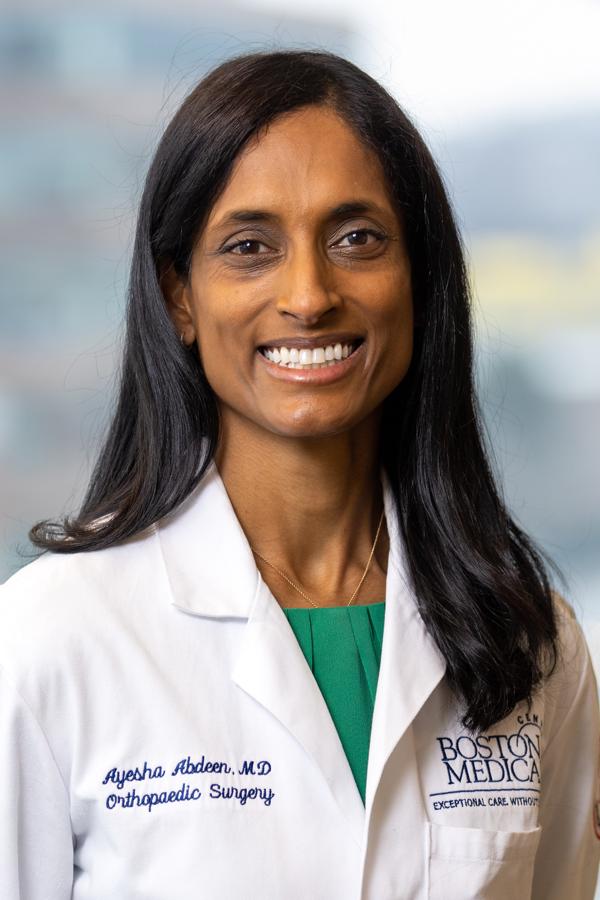
My name is Aisha Abdeen. I'm Chief of the Division of Hip and Knee Arthroplasty at Boston Medical center and Associate professor of Orthopedic Surgery at Boston University.
[00:01:08] Speaker A: I have with me I am Andrew Schoenfeld, professor of Orthopedic Surgery and Vice Chair of Education, Harvard Medical School.
[00:01:17] Speaker B: Excellent. We will jump into the top of the pile.
What's new in Limb Lengthening and Deformity? Correction by Vote this is Permanently Free Surgeon Ownership in the Ambulatory Arthroplasty Era Preserving Transparency and Clinical Neutrality as Site of Service shifts by Siddiqui AI vs AI Healthcare's Spy vs Spy a comedy of optimization by DeFazio and this is permanently free.
I had never prayed in an operating room before. Reflections on Global Orthopedics Faith and the Illusion of Control in the Operating Room by Asturias. This is a highlight article and it is permanently free.
Federated Computing and Orthopedic Surgery A Paradigm Shift in Collaborative Multicentered Research by Hill.
Intraoperative Surgical Smoke During Arthroplasty Early Unhealthy Level Exposure and Approach Dependent Risk by Shiksia. It's a highlight and a commentary.
See, this is the reason I use the smoke. Evacuating Bovie.
[00:02:22] Speaker A: Yes, yes. Well done.
[00:02:24] Speaker B: Getting to the headlines. We have Dr. Schoenfeld presenting the first headline surgical treatment of recurrent lumbar disc herniation. To Fuse or Not to Fuse. A single center analysis of clinical and radiographic characteristics and surgical outcomes of 450 patients. This is by Fisher and colleagues. There is a commentary an infographic highlight, and it's permanently free.
[00:02:46] Speaker A: All right, so I think at the end of the last.
Your case is on hold, episode 111. I. I told you, I thought that the. The articles were kind of like a little bit milquetoast, like you could. There wasn't really a whole lot to kind of. We were very much like, yes, this one. Oh, it's. It's interesting. It's. Yeah. You know, I don't. Maybe there were some questions on clinical applicability, but it was just. It was very kind of wishy. Widely. It was just like, yeah, no, it's fine. It's fine. It's good. Well, this is not going to be the case.
This is not the case for episode 112, that's for sure. So let's get into this. I think there's a lot of talk about here. This is obviously a study that's using propensity score matching to address an appropriate question. Recurrent lumbar disc herniations. Do you go with trying to remove just the disc? Again, a less invasive, less surgically intense procedure, but also one that may have lower levels of efficacy because there's only so much disc you can remove. Questions of dissection, lean instability, or do you go, we're going to take the disc out entirely. We're going to do an interbody fusion instrumentation.
And that's obviously a more intensive procedure. The opinions on this, I think, have kind of evolved over time. When I was in fellowship, it was a little bit more like patients got two cracks at just having a discectomy procedure, and if they herniated a third time, then it was kind of like, all right, they're going to have the interbody fusion. I think that some of that has definitely changed. There has been a paradigm shift, particularly in the US if only because the ability to perform interbody fusion procedures has gotten less and less invasive and just more aligned with kind of other. A small incision, minimal blood loss, but you're still putting in hardware and instrumentation. And it is, at a minimum, more costly procedure.
The balance being that ideally, the interbody fusion is going to be the more definitive procedure versus another discectomy, which may leave the prospect for that patient needing a future surgery down the line. Even if they do well initially, you wouldn't expect another surgical procedure after the fusion, unless, of course, there was a complication or some type of issue.
The authors want to use propensity score matching. Now, ideally, propensity score matching should be applied in a causal inference way. They Say they want to use propensity score matching to control for confounding factors, which, of course, when you're doing confounding by indication, you're trying to control for the confounders that play into a decision for surgery.
So, so far, so good. Although there was some, you know, little issues with the terminology there that I was like, are we talking about using the propensity score matching for really what it's ideal for, or just sort of as a proxy for. We just want to match up. People that kind of look like patient A and patient B are very similar, and in terms of characteristics such as age, body mass index, occupation, biologic sex or gender, type of surgery, et cetera, they were ideally trying to compare the outcomes of the repeat microdiscectomy versus interbody fusion.
And they hypothesized that repeat microdiscectomy would provide similar functional outcomes to interbody fusion with higher reoperation rates. And that's great. And then somewhere else it comes in that Mr. Lebowski expressly wanted me to repeat to you that we're going to do a risk factor analysis.
Just like, why?
Why are we doing that? I repeat, why?
The risk factor analysis is a completely separate question than what you're getting with a study that has a causal inference question where there might be clinical equipoise around two different procedures. And if you're doing the propensity score matching and you're truncating your cohort, then you're already restricting what the risk factor analysis can do. However, they're sort of approaching it from they're going to do the propensity score match, but they're also going to do the risk factor analysis on the side. It's just, it's like you need a whole paper to do the risk factor analysis part. And I'm not encouraging salami slicing them, but what I'm really saying is, like, if you, if your question is about the risk factors, that is separate, it's a separate article. And in the 2,700 words, or even in 3,000 words or 3,500 words, there really isn't enough space to sink your teeth into both concepts.
So right off the bat, we're kind of left lacking. You're not getting enough of the causal inference piece, you're not getting enough of the risk factor analysis. But taking a step back into the propensity score matching, as we've discussed previously, that works best when the factors that you are using in the propensity score are the ones that are going to inform the decision for the surgical intervention.
And if you're going to do that in a scientific fashion, step one is you identify those factors. You provide the technical proof that shows that they are the ones that are informing, including the calibration and the discrimination property. So you can say 90% of the decision around interbody versus microdiscectomy were based on these characteristics.
They don't provide that.
The variables that they include are very conventional. Age, sex, bmi, ASA Furman grade, which is the degenerative grade of the discs, modic change, the baseline core outcome measures index a patient reported outcome.
And I mean it's just missing, you know, some of like the standard details that we would expect due diligence around building the propensity score model. I would argue these are not factors that play that much. Maybe the firm and grade to some degree or height loss or something to that effect. But a lot of other factors aren't really going to play into who's getting the interbody fusion. And if they do, it's there's high prospect for residual confounding.
So they didn't have that many patients to begin with. I mean 450 sounds like a lot, but once you start trying to do propensity score matching, they only ended up with 96 pairs. That really isn't that many.
And they're using P value thresholds for assessing coach mass balance, it would seem, which is not a best practice.
And then they say they're using logistic regression to analyze the reoperation risk factors.
But according to figure three, those are all, they say, univariate, really bivariate comparisons. So unadjusted comparisons. So a further chink in the proverbial armor of this particular study that's already embattled to a high, a high degree.
So they found that the impact factor, not the impact factor. When I see, I'm just in the journal mindset. If is impact factor got it, it should be interbody fusion as well.
But I'm operating from a journal mindset right now. But the intermodal fusion group showed a trend toward better patient reported outcome scores at 12 months.
This is a 3.34 versus a 4.01. And the authors are invested in the fact that the P value was essentially 0.06.
But what I mean, the clinical relevance of that is, you know, whatever the statistic, even if it was statistically significant, it's not even a one point difference in the score.
So you know, they're talking about this is a propensity match analysis of 450 patients, but it's not, it's 192 patients in the match.
And the findings are that as expected, the interbody fusion demonstrated superior long term durability, lower reoperation rates and they recommend that it should be considered in patients with BMI over 35 and those with progressive disc degeneration. But they didn't really, these are just based on these bivariate analyses that they did. I think at the end of the day, if I'm the reader or I'm advising a reader here, I'm, I'm really just ignoring the risk factor part like that. That was a, an unnecessary misstep that also provides highly, highly confounded and impaired data that's, you know, they give these, like, these shades of significance and trending and not significant. But you look at the 95% confidence intervals I'm talking about in Figure 3 and they're all wide figures or almost every one of them is crossing the null effect value of 1.0.
So none of those things, those are all just semantics.
Doesn't matter if it was trending. If it's crossing the 95% confidence interval line including 1.0 the null, it's not significant. That's it. They're significant and not significant. And even their one significant finding, which is on bmi, again it's uncontrolled, it's borderline. The lower bound is at 1.07. If you start adding in, controlling for other factors or looking at interactions, it's going to lose significance.
That's just the way these kinds of things go.
So I think it's a marginally interesting finding. I agree with their conclusion, but it is the preferbial type 3 error which is agree with your findings but don't agree with how you got there.
Agree with your conclusion, but your conclusion is for like the wrong reason.
[00:12:48] Speaker B: I can't put it any better. You have it from this is your entire wheelhouse in terms of to fuse or not to fuse. And we have it from our stats guru in terms of the methodology. If you were to have designed a study to really find the factors that would change clinical management, what factors would you have included instead of BMI and degenerative disc prevention?
[00:13:08] Speaker A: I mean, you really want to look at what are the clinical characteristics that are driving the decision to do the interbody fusion versus the repeat discectomy procedure. And you can do this by, you know, maybe you don't really know. You can do conceptual models. So I would say like, you know, are they having more radicular or neurogenic manifestations. You would want some of that data in there. You want to look at, you know, maybe bmi, but I'm not really sure because it's kind of like you can argue against both, both based on bmi.
Certainly an interbody fusion is going to be more complex, but so is a discectomy. The prospect for a future herniation may be higher in a patient with higher BMI. The number of comorbidities, blood sugar control, hemoglobin A1C.
If you're giving me, I want to see what's your ideal. I want to look at all of those things and then some and even more with additional vascular parameters. Serum albumin. They had smoking status, but I want to look at it in a way it's not necessarily that I have that much of an issue with the variables that they were including.
I'm just not convinced that all of those variables missing, some of the ones that I brought up that they didn't have, are really what's driving the decision for the surgery. Right. And you can't intuitively even know that because you're not the surgeon who made the decision.
And sometimes that's in shared decision making. So there are a lot of other proxies and maybe even the surgeons don't know themselves. And it's. Some of it is subliminal or, you know, you know, there's an implicit bias there to go one way or the other that they're not even articulating themselves.
So that's why you take as much data as you have and, and everything that you think can be conceivably included, you can look at and examine in step one.
So had they done that, I would have much less of an issue if there was a very robust, technically sound and scientifically well articulated argument for. These are the parameters that we included. And this propensity model, the model that builds a propensity score has this level of calibration and this level of discrimination. And you're never going to get to like 90%. Like. Like. Right. Like we're happy with anything that's 80% or above. And that would still mean that there's, you know, somewhere 15, 18, 20% residual confounding in that model. And we understand that. But if you ran this one and you got back the AUC is 0.6 or you're not going to be thrilled. Right, Exactly. And that's something, I think that's important. And, and really, in today's day and age, we need to see that kind of due diligence, I think.
[00:15:59] Speaker B: Yep. So it seems to me this remains a real clinical context for shared decision making still.
[00:16:04] Speaker A: Yes. And I think, but I do think that the needle is moving for two reasons. One, as I mentioned, interbody procedures are much less invasive than they used to be.
And two, also a lot of the minimally invasive technological advancements are enabling inner body. They're not enabling you to do a microdiscectomy.
Yes. You can do it through a tube or something like that, or there'll be some people who want to do it endoscopically or something to that effect. Although I don't know if there's scar tissue in there and things like that. Those are high risk for that. Those procedures may have to be reverted into an open something like that. And I don't know if you even want to go down that that course. But most of the the really slick technological advancements that allow you to make small incisions, that they're facilitating interbody procedures or they're facilitating fusion based procedures, they're not necessarily facilitating revision discectomy procedures.
[00:17:08] Speaker B: Right.
And the skeptic in me will ask this question, is there a big difference in reimbursement rates for either of these procedures?
[00:17:16] Speaker A: Yes.
Toward to the advantage of the interbody fusion? Yes.
[00:17:23] Speaker B: Got it.
Okay, Very good. So let's move on to my paper. The paper I discussed was effectiveness of intraosseous morphine for pain control in total knee arthroplasty. A double blinded randomized trial by picus. There's a commentary, it's the lead paper, and there's a visual summary and it is 30 days free.
Pain management and innovative ways to address pain after total knee arthroplasty is always worthy of investigation. The intraosseous route of medication administration during total joint arthroplasty for hip and knee has been a topic of interest recently. There have been a number of studies actually published looking at intraosseous vancomycin and showing that it can be more targeted and effective than systemic vanco in infection prevention in total joint arthroplasty. Specifically, studies suggest increased local tissue and decreased systemic concentrations of vanco in both hip and knee replacements.
The authors of this current study cite a prior study by Brozovich and associates where they showed a double blind RCT of 48 patients that included morphine plus the vancomycin and that it resulted in decreased pain scores and opioid consumption after total knee arthroplasty.
The current study is a larger scale study that was performed in 100 patients to verify the reproducibility of this analgesic technique in the setting of their own institutional multimodal pain management regimens. The study is a single centered study out of Virginia Tech that was a double blinded RCT to evaluate the effect of adding morphine to the intraosseous vanco in patients undergoing total knee arthroplasty. Patients were randomized to receive IO injection of 10 milligrams of morphine and and 100 milligrams of vancomycin in 110 milliliters of saline versus the same injection without morphine.
The primary outcome measures were pain scores, morphine equivalence, consumption and nausea and vomiting events which were solicited from patients via six daily text messages from 14 days post op.
PACU pain scores and MME were also collected morphine equivalents. Inclusion criteria were ages 18 to 100 years old undergoing primary elective total neuropharplasty patients who were comfortable texting and able to consent.
Patients were excluded if they were unable to receive spinal anesthesia or adductor canal block and had a perioperative deviation from routine care or chronic opioid use defined as use of an opioid within one month of surgery or history of opioid addiction or allergy to the medications or if they had a post OP Rescue. At Dr. Kanal Balk, the study had three surgeons perform the operation without robotics and without press fit implants which can be associated with increased pain in the initial post op period. That's mostly anecdotal, but it makes sense that they excluded the press fit implants.
A power classic calculation was performed indicating a minimum of 34 patients for 80% power and significance of 0.05 and to account for 20% attrition. They aimed for 41 patients in each group.
There were 155 patients screened, 100 enrolled, 53 in the experimental group and 47 controls. There were no differences in age, laterality, ethnicity, ASA class or tobacco use, bmi, Charleston Comorbidity Index, operative time or length of stay. It would have been interesting to see if there was a difference in severity of OA based on KL classification or the amount of deformity or flexion contractures as we expect more severe disease correction potentially to be associated with more increased post op pain, but they didn't look at that.
The authors found there was a significant change in post op visual analog scale scores across time in both groups. However, there was no significant difference in average BAS pain scores at any point from the PACU to 14 days post op. The experimental group had significantly greater median interoperative MME consumption 0 vs 30 MMEs and medial total inpatient MME as there was no difference in morphine consumption from PACU to post op day 14.
There was no difference in the rates of nausea or vomiting frequency at any time point from 114 days postoperatively. There was no difference in KOOS junior scores or promised global physical health scores between the two groups from pre op to 6 weeks postoperatively. The experimental group had improved PROMIS global mental health scores from pre op to six weeks postoperatively. That was the only major difference in the discussion. The authors compared their findings with the Brozovic paper and and highlighted the differences between the studies. The Brozovich group used additional opioids, specifically hydrocodone and morphine for breakthrough pain whereas the current study used NSAIDS and pregabalin. The adductor block approach was different in the Brozovich paper this was done preoperatively by anesthesia and clonidine was added to the rapivacaine whereas in the current study it was performed intraoperatively by the surgeon without clonidine, which I thought was interesting. Typically the nerve blocks are done by the anesthesiologist before the operation. This was unique that the surgeons actually performed it themselves and the spinal was slightly different between the two studies. It was hyperbaric in the prior study and isobaric in the current.
The data was collected with a patient reported diary in the prior study which could have limitations with recall bias versus the real time texting of the current study.
It's interesting that they were equal in age because or similar age groups, but one would think that people being comfortable with texting would be on the younger side. The proposed benefit of the current study is that it was in real time versus a retrospective recall of pain after the fact.
I think it would be helpful to have baseline deformity or OA severity to really know that we're comparing apples to apples in the study. The study does highlight the importance of continued investigation of new innovations and that interpretation of data needs to be in the specific context of the population being studied and nuances such as the details of 1 institutional multimodal analgesia protocol can have different implications. I think that was the real take home message of this article is that you can take one intervention and it might sound really cool and be a really nice innovation and it might show drastic differences in one population with one particular protocol but if you put it in a different context with different protocols, it might not prove to be beneficial. And that's exactly what they're sort of showing here.
We talk about ERAS protocols, but not one ERAS protocol is the same as another ERAS protocol, and they demonstrated that here very nicely.
The other thing is intraosseous administration has not become universal or standard of care for vancomycin administration.
Some of the findings are compelling. It does require sort of a different workflow. The papers that promote it, and there are videos online about how to administer it. But you do have to veer from your typical workflow. It requires a specialized needle and ensuring that it goes into the appropriate area in the tibial proximal tibia and showing its benefit and ease of use has been done. But I don't think it's as easy to incorporate in all practices because it does veer from our typical workflow.
So I think it's very interesting. I think it's really important data because it shows that we shouldn't blindly, necessarily incorporate innovations unless we're certain that they're going to make a difference in our own clinical context. I think that's one of the major values of this paper.
What are your thoughts?
[00:24:59] Speaker A: Yeah, I thought that, you know, that it seems to me. I see I'm seeing a lot more of this fascination with doing things intraosseous, like interosseous access, typically the, you know, intermedial tibial plateau. And I've seen it come up in a couple of different things. And I'm just.
Just asking myself, like, why?
[00:25:21] Speaker B: Yeah.
[00:25:21] Speaker A: Is it really making things better or is it just like, we need to. We need to innovate something? Like, we're. We're. We're really reaching the.
We're starting to bend the curve here in terms of exciting innovation. So let's figure out something else like this. This seemed like an unnecessary advancement relative to the other things that people are doing in terms of multimodal pain control and what we know, that that's already out there, that has been shown to be reliably and predictably efficacious without having to disrupt your, you know, sort of standardized surgical approach. And it's nice that it's a randomized trial. I think it does highlight some important things, all of which you already touched on.
Doesn't really move things too much for me.
[00:26:11] Speaker B: Yeah, got it. Okay, so let's move to our. Your case is on hold featurette. This study was entitled Development of a Radiographic Scoring System to Estimate Acetabular Protrusion Risk in Patients with osteolytic periacetabular metastases by Jiang and there is a commentary so you don't have to take it from us.
This study was performed by the Yale Oncology Group and their Division of Biomechanics and Bioengineering, whereby they developed a radiographic scoring system to estimate acetabular protrusial risk in patients with acetabular metastatic disease.
Protrusio acetabuli, the medialization of the femoral head beyond the iliotial iliotia line or Kohler's line, is a significant problem in the setting of metastatic bone cancer because it can require extensive open reduction with megaprostheses, which can increase complications such as infection, transfusion, delayed chemotherapy.
Historically we've been using the Harrington classification and that was developed to evaluate periacetava disease, and class two defects involve the medial wall or the quadrilateral plate.
Harrington also described the technique of fixation for acetabular lesions whereby stymon pins are drilled in from the iliac crest to span the quadrilateral plate and into the ischium. Then the acetabular component is cemented into this rebar formed by pins. We did a lot of those when I was an oncology fellow many, many years ago.
The technique is not as common in the setting of contemporary acetabular reconstructive innovation such as augments and porous metal.
The authors indicate that there is a need for an updated risk stratification for protrusio in the setting of metastatic tumors.
The goals were to create a clinically relevant radiographic risk model and to identify which biomechanical regions should be targeted for prophylactic fixation.
The authors identified patients who underwent primary surgical stabilization for periacetabular metastasis with osteolytic or mixed osteolytic osteoblastic characteristics. The study collection period was 2017 through January 2025.
Patients were older than 17 years old with impending and completed pathologic fractures. Biopsy confirmed metastatic cancer. Exclusion criteria were patients without CT scans prior to development of ambulatory pain or protrusio secondary revision, cases in which the index surgery was performed at other institutions and bilateral cases because they used the contralateral normal side for comparison.
The authors defined protrusio as any ipsilateral femoral head migration, either lateral or medial. Historically we describe it as medial, but they also included lateral protrusio combined with complete unidirectional joint space loss due to metastasis. The diagnosis was independently verified by the senior authors and radiologist on review prior to data collection. This is different from what we use in the setting of arthroplasty as mentioned because we typically use that medial Kohler's line and lateralization is not typically considered protrusio, but they included all of this.
All preoperative CT scans were evaluated. Each patient had at least one scan within three months prior to clinical presentation and the scans occurring prior to documented protrusio were evaluated as well. Radiographic measurements were made on coronal views and the subchondral cortical bone of the acetabular roof was defined as the weight bearing dome. The trabecular bone directly superior to the weight bearing cortical dome was also studied.
The radiographic parameters recorded including the presence of bone defects, the thinning or linear fracture in the lateral, middle or medial third of the weight bearing dome and the presence of displaced weight bearing dome fracture and the presence of bone defects, thinning or linear fracture of the acetabular trabecular bone.
Demographic data was collected as well as proms, specifically the ECoG score and the Pain and Ambulatory functional score from the MSK Tumor Society score and the Visual Analog scale.
These were tracked at 2 weeks, 3, 6, 12, and 24 months.
Radiographic parameters recorded included the presence of bone defects, thinning or linear fracture in the lateral, middle or medial third of the weight bearing dome and the presence of a displaced fracture in the weight bearing dome. Hounsfield measurements of the weight bearing cortical dome and trabecular bone were performed to assess the bone mass on CT and the CT scan was used to generate a 3D model for the pelvis and proximal femur. The cortical dome is divided into three equal portions and grouped based on the medial, middle or lateral third and combinations are one or two or three of these being lost.
Patients with protrusio had worse pain and ambulatory function scores. The average score in the protrusio group indicated the use of a wheelchair and severe pain. Patients with cortical bone loss in the lateral or medial third of the weight bearing dome also had worse pain and ambulatory functional scores.
A greater than 50% cortical bone mass decrease of the acetabular weight bearing dome compared to the contralateral normal side was strongly associated with protrusio with cortical bone loss involvement in the middle third and the apex of the weight bearing dome with contiguous medial or lateral third segments there was nearly universal progression to protruzio. In addition, displaced cortical fracture of the weight bearing dome was significantly associated with increased odds of protrusio.
They created a score, the protrusio acetabular prediction score or the acronym PAPS and a score of greater than or equal to 3 is projective for protrusio. And they found this with a 95% sensitivity and 91% specificity. They identified that what they considered level three CT findings based on all three zones of the donor involved, which received three points, and then level two findings based on Hounsfield ratio of contralateral normal side, which received two points, as well as fractures in the subchondral bone or subchondral bone loss. Then level one findings were whether the inner or outer wall fracture was present and isolated subchondral bone loss, each of which received one point. They created a nice table that shows the severity score and how you can add up those points based on the CT findings.
I thought this was a very thorough approach. It's a very timely topic to have an updated understanding of protrusio risk factors.
It would have been helpful to have a powered study for tumor type. They were not powered for tumor type, in which case it would likely require a multicenter approach and perhaps that's something they would embark upon next. In addition, it would be helpful to have data based on the fixation type and whether that had any bearing on the failure.
So I think it's a very, very meaningful study. They have a lot of data and it creates a very simplified, usable classification system. But I think to take it the next step as to how to address these, you know, with our contemporary fixation reconstructive options would be very helpful.
[00:33:01] Speaker A: Yeah, I kind of have a different take on some of this.
[00:33:06] Speaker B: Okay, let's hear it more.
[00:33:08] Speaker A: More from just the.
You know, the fact is, is that they are really limited in terms of their Cohort.
They have 87 patients overall, of which only 20 have the outcome of interest, which is the protrusio. So all of this production is built around the experience of those 20 cases. And I think that is very evident when you look at their AUC. For the Protrusio S tabuli prediction score is 0.99. That is a lab value, or that is a value that only ever shows up in a lab and doesn't show up in real life.
[00:33:51] Speaker B: Okay.
[00:33:53] Speaker A: You don't encounter AUCs as zero. That's basically all the time. That's 100%. Essentially nothing is never and nothing is always. You expand this to a broader population of patients that is an artifact from the fact that there is restricted clinical variation, which is evident from the fact that you only had 20 cases to begin with. And if they're, you know, basically 20 avatars of the same person, then it doesn't matter that they're separate. They're. They're all basically looking a particular way. This is not the standardized practice or the best approach to developing a risk score. First off, you need a bigger population. You need an event rate that will allow you to do adjusted analysis. And then you have a regression analysis that's adjusted and accounting for confounders and covariates and important clinical factors that may impair your determinations. And then you look at the beta estimates off of that and then you can potentially and ostensibly build risk score off of the beta estimates. They just did. They did as much as they could do.
And some people might say, but, you know, what do you want from them? I mean, they only had 87 patients. They only had 20 cases. Right? So, but what I want from them is not to build a risk score that they then tell people like, you should use this to inform patient care. That's what I want from them. I think this, as you said, it's a timely topic, it's an interesting topic. I think this is hypothesis generating.
I think that their putative risk score could be a framework through which to distill something more robust. But my question is this was one center with 87 patients and 20 cases of Protrusio. Right? Why not partner with, if you have five other centers, we'll say, you know, now you're getting, and they all have the same numbers, you're getting close to 450 with 100.
That, that is, that, that's still not ideal, but it's, it's certainly much better than, than what, what this is. And you're gonna have to do that anyway because you can't take this and say, yeah, this is ready for prime time.
I think they're, they're a little bit over invested in the score.
I don't think that the finite element analysis, which typically, that's a separate biomechanic we already talked about. Like, you know, they're doing the same kind of thing where they've got essentially basically a natural history study, a risk factor study that's very limited, but still is a risk factor study to build their score and then a finite element. So they've got like three studies here that they're trying to pack into one, which is, it's not ideal. And I would just set the finite element Analysis aside that it's a. It's. It's obviously a theoretical model that also is based on.
And maybe it's just because I'm too concrete, but it's like the study is based on a normal human pelvic CT scan.
Right?
[00:36:57] Speaker B: Right.
[00:36:57] Speaker A: So I could take, you know, it's just basically I'm creating a story about, like, if this area is materially damaged or this area was here and this area is materially damaged, here's what happens. Right. Like, look at this. It all. It all completely collapses or all. There's protrusio. But none of that is actually based on real cases. It's just based on what you're telling the computer to sort of, you know, draw this picture. Like it's as AI. As AI gets almost in some way. Right. And you started with a normal. You're not taking an amalgamation of all of these compromised policies and building some supermodel that's all informed by these 87 cases. Right. You're. It's a separate narrative that I think can be set aside from. From the work that was done here.
And again, I would say at the end of the day, it's. It's interesting, it's novel for sure. Impactful, potentially. The jury is out on that. It's hypothesis generating, establishes a framework from which future studies should be built. And you can't really. Due diligence requires you to validate this in your own patients if you're going to apply this.
And my guess is, as we discussed about scoring systems, even if your score. If the scoring system performs well for you, that just means that it works for your. It's going to work at Boston University patients that. I know you don't do this, but just bear with me.
[00:38:23] Speaker B: Absolutely. Yeah, that makes sense.
[00:38:26] Speaker A: So I think there's a lot more work that has to be done in this context that they're not really sort of presenting again. I think a larger sample collected across different centers to increase the clinical variation and broaden the representative aspects that can be studied will do a lot more.
[00:38:46] Speaker B: Her life is in your hands. For the dude on this one.
[00:38:49] Speaker A: Yeah.
Her life is in your.
Don't say that. Don't say that.
[00:38:57] Speaker B: Well, so on hold perhaps for you?
[00:39:01] Speaker A: Yes, on hold for me.
[00:39:04] Speaker B: Let's get to our honorable mentions. First, we have effect of timing of first consultation with a sarcoma specialist following unplanned excision oncologic outcomes of patients with soft tissue sarcomas by John and Associates. There is a commentary and an infographic.
Unplanned excisions of soft tissue sarcomas are resections performed with without appropriate preoperative imaging or biopsy confirmation. These procedures represent a large portion of referrals to sarcoma centers and can negatively influence oncologic outcomes.
There is limited evidence to suggest the impact of consultation timing after unplanned excisions and so this study aimed to compare oncologic outcomes of patients evaluated early versus late at a sarcoma center following unplanned excision. So they had 397 patients treated for soft tissue sarcoma from 2012 to 2020 at two tertiary care centers. 117 of these underwent unplanned excisions followed by later tumor bed excision and then they analyzed these cases.
Consultation with a sarcoma specialist was defined as the patient's first visit with a multidisciplinary sarcoma team.
Demographic clinical tumor characteristics were collected. Primary outcomes included local recurrence, free survival, metastasis free survival, and overall survival.
Among the 117 patients, 26 patients were seen early and 91 were seen late. The rate of metastasis was significantly higher in the late cohort, 48% versus 11.5% or 48.4% versus 11.5%.
Mortality was also worse and the five year Kaplan Meier survival outcomes favored early consultation. This all makes sense on a multivariable analysis. The late consultation was independently associated with inferior local recurrence free survival, and so the authors conclude that delayed consultation after an unplanned excision was associated with significantly worse outcomes, including higher rates of metastasis and mortality, and their results emphasize the importance of a timely referral to a sarcoma center for early multidisciplinary management.
The next study was surprisingly low rates of aseptic loosening in 575 rotating hinge total knee arthroplasties. This is by Terhune and associates from the Mayo Clinic and there is a commentary on this as well.
Essentially, rotating hinge total knee arthroplasty have shown reasonable short term survivalship in small series, but this study attempted to look at a larger cohort of contemporary rotating hinge total knee arthroplasties.
They retrospectively identified 575 cases 60% were used for aseptic etiologies and 40 were used for reimplantation following a two stage treatment for prosthetic joint infection. These were done between 2002 to 2021 at a single institution at the Mayo Clinic. The mean age was 67 years.
They found survivorship free from any revision was 76% at 5 years and 64% at 10 years. The most common revision indications were prosthetic joint infection in 54% and aseptic loosening in 20%.
Rotating hinge total nerythoplasty used in the primary setting showed better survivorship compared with use in reimplantation after PJI.
Survivorship free from revision for aseptic loosening was 96% at 5 years and 90% at 10 years.
Radiographic analysis of 425 knees that were not revised had radiographs available for review and showed that 6% of femoral components and 8% of TPL components had evidence of loosening at the time of final follow up and the mean Needs society score improved from 33 to 69 at 2 years.
The group concluded that the 10 year survivorship free from aseptic loosening was quite high and it represents one of the best survivorship free from aseptic loosening published in this type of implant with a rotating hinge and knees with prior prostate joint infection had a markedly poorer survivorship than knees treated for aseptic etiology.
There you have it. Those are our cases in this issue of jbjs.
Stay tuned for next time when we will have our cases presented by Dr. Schoenfeld and if you like what you heard, please like and subscribe and give us a five star review.
[00:43:24] Speaker A: Thanks everyone.