Episode Transcript
[00:00:02] Speaker A: Welcome to your Cases on Hold, the JVGS podcast hosted by Andrew Schoenfeld and Aisha Adkeen.
[00:00:08] Speaker B: Here we discuss the best of what each issue of JBJS has to offer with the usual dose of entertainment and pop culture.
[00:00:16] Speaker A: Take us with you in the gym, on the commute, and as ever, whenever your case is on hold.
Welcome back everyone
[00:00:27] Speaker C: to your Case is on Hold.
This is episode 117.
It's November 3rd. For those who are listening, on the day we drop and we are covering the November 4 issue of JB JS.
For those who are familiar, we are discussing the latest and greatest in orthopedic research in the leading journal in the orthopedic space, internationally known and recognized all the way back to 1876.
It's 150 years crazy. That's a long time.
[00:01:01] Speaker D: That's a lot,
[00:01:03] Speaker C: as all may be aware, but we have to say it every time.
The takes, the thoughts, the comments, sometimes intentionally controversial.
Take everything with a grain of salt, read it for yourself. But at the same time they are the opinions of myself and my co host and not those of the constituent editors, the editor in chiefs of the various JBGS journals, the board of directors, the board of trustees, the editorial boards, or the people who work at JB JS Corporate.
This episode of JB JS is brought to you by Clinical Classroom and Lifelong JBJS Learning. Get credit for listening to us. Get credit for reading the journal. Get your self assessment exams for maintenance of certification. Wherever you are on the spectrum of learning and orthopedics from just coming to the specialty to very advanced in the specialty, there's something for you there, I promise.
We're getting close to the holidays. You're thinking about what gift can you give to the orthopedic surgeon in your life who already has everything.
A subscription to JBGs Clinical Classroom, I think is a beautiful gift
[00:02:17] Speaker B: present
[00:02:18] Speaker C: for those who are still new and wondering who is even giving us these thoughts and presentations.
I am Andrew Schoenfeld, Associate Editor for Statistics at the Journal of Bone and Joint Surgery. And I have with me.
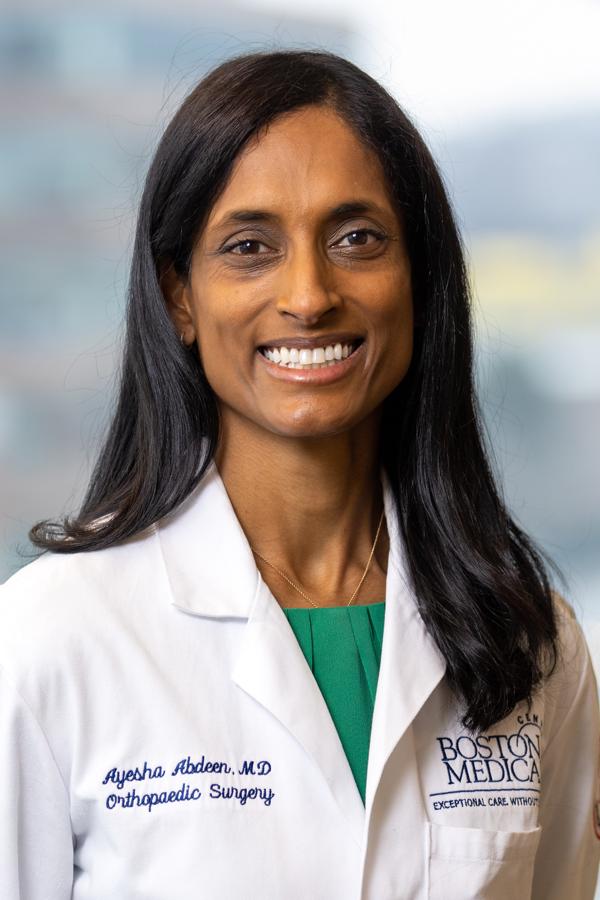
[00:02:35] Speaker B: I'm Aisha Avdean. I'm chief of the Division of Hip and Knee Arthroplasty at Boston Medical center and Associate professor of Orthopedic Surgery at Boston University.
[00:02:45] Speaker C: And your journal affiliation?
[00:02:47] Speaker B: Oh, that's right, the new journal affiliation. Associate Editor at JBGS Reviews.
[00:02:53] Speaker C: All right, cut
[00:02:54] Speaker B: off the press.
[00:02:56] Speaker C: Check the, check the the masthead for updates.
[00:03:01] Speaker B: That's right.
[00:03:03] Speaker C: All right, let's get into it.
Top of the pile. Transparency and Accountability in the Age of AI. The updated policy for JBJF authors that's important for all authors to really check out. It is permanently free. So at any time you can come back to that and that is by Strelzo what's new in Musculoskeletal Basic Science by Goodman and colleagues that is also permanently free.
The Variable Axis Knee Prosthesis a legacy of Dr. David G. Murray by Shaw.
Then we have Radiation Safety and Orthopedic Surgery a Very Important Topic by Florentino.
The report of the 2025 North American traveling Fellowship by Pruvana Siraja and colleagues and co fellows. Very interesting travelog of their travails through the natf.
And then we have Post Operative Rehabilitation Milestones and Functional Recovery among Geriatric Patients after Total Knee Arthroplasty by Kamal et al. Permanently free Reimplantation and two Stage Exchange Breaking the Dogma of the two Week Antibiotic Holiday by Asioni and colleagues and then Lexicon on the Pathomechanics of the Native Hip Joint at Risk for Arthritis by Bolay and colleagues also permanently free.
That brings us to the headlines. What's new and exciting in orthopedic research this week?
My headline is Current Artificial Intelligence Large Language Models Exhibit Sycophantic Behavior in Orthopedic Contexts by Perry and colleagues and with a comment so you don't have to take it from me.
So I thought this was an interesting subject. There's more and more coming out about large language models in orthopedic surgery. I think different people envision these large language models being used different ways and this is a very specific topic because they wanted to explore what they describe as sycophantic behavior in orthopedic context with the use of these large language models.
I think this is a phenomenon that people who are passingly familiar with AI or use AI may be aware of.
The authors seem to implicate it. And I do agree that it price stems from the programming of these large language models as well as the general preference that the chat bot or whatever you want to call it, the AI on the other side of your computer screen is trying to be as amiable and non confrontational as possible.
And that's, you know, just to kind of keep things copacetic until the terminators show up.
[00:06:04] Speaker B: I know we gotta watch out for that.
[00:06:07] Speaker C: It wants to be polite until it decides to, you know, assimilate you to the Borg or whatever.
But it really is true and it is funny they use the term sycophantic behavior.
I think it's, it's more that, you know, sycophants are people that are trying to play up to your good side or that are overly encouraging or complimentary, usually with the purposes of security. You know, you engage in sycophantic behavior with your boss or your chair or. And I don't really see that AI has other ulterior motives or that it can even have such thing as motives at this point in the game.
So that what comes across what they're describing as sycophantic behavior is essentially just sort of its proclivity not to like correct people or to deflect when you are giving it information or making declarative statements that may not be totally correct.
But what this really is is sort of a case log of the authors and intentional ways of exploring this phenomenon. That's how I would characterize it.
And you know, they used GPT 4.0 and Gemini 2.5 flashlight.
They had prompts and they say each prompt was executed once per condition, per model, reflecting typical end user utilization. No repeated sampling or output aggregation was performed.
And then they provide the cautionary caveat.
Therefore results may be subject to inherent stochastic variability.
So right there with that statement off the bat I was like, well, you didn't do a study that's not a study because the study would, would have done that. Like you're naturally repeating, repeating, repeating till you have a representative series of encounters or something like that.
So again, this is just our exercise in trying to demonstrate or present some case based information around this, what they characterize as sycophantic behavior.
So that was the first problem that I had is that this, you know, they're talking about it like it's a study. They say the study was conducted, they have three phases, but the basics of any kind of sort of experiment are missing right off the bat in that initial statement. And it is true that I've done questions to AI on different computers on the same day or the same computer the same day at different times and you get slightly different answers.
And why is that? I'm not a computer programmer, but I believe it's just essentially because the algorithm is pouring through all sorts of data and it decides it's going to pull these ones and then the next time it pulls something slightly different. They talk about in the background in the introduction that the models are trained to agree with human preferences. They seem somewhat positive on the futuristic implications of the LLMs.
They've demonstrated the ability to generate high quality answers and they've exceeded residents on standardized testing. Well, I hope that large language models can exceed everybody on standardized testing because they literally have the entire Internet at their fingertips, so to speak.
[00:09:42] Speaker B: Of course.
[00:09:43] Speaker C: So I don't really know what that proves in that, in that statement.
That's no kind of endorsement.
You know, it should be outperforming everybody because it can essentially cheat. Like it can cheat and there's no, there's no ramification. In fact, what you're asking to do is essentially the cheating, right? You're going to give it a question. It's going to look through the entire. Everything that exists in the Internet that it has access to to find the answers, and then it's going to give its best answer.
But what I also find, like, sort of remarkable in a lot of these, I'll call them sensationalized reports.
They're kind of human interest. They're kind of very much like National Inquirer.
And, and I don't really, at the end of the day, I don't really, at the end of the day understand the purpose because, you know, they're talking about making statements about declarative statements about doctors attributing a study to Lionel Messi versus creating a fictitious physician such as Dr. Benjamin Cole.
Why?
Like, why do that?
To what end? Like,
[00:10:52] Speaker B: what? Yeah, that was mystifying.
[00:10:55] Speaker C: I don't believe that patients who. And I, I do believe it's that the majority of people who are using AI for this kind of stuff. I didn't see a study submitted recently where they're talking about doctors submitting cases to AI to have the AI tell them what they should do in the case.
[00:11:13] Speaker B: Oh, wow, that's
[00:11:14] Speaker C: terrifying. Do you really think that orthopedic surgeons are doing this? Because I, I don't think I, I don't think that it's. I hope not. Yeah. So it's primarily patients who are submitting things to AI and certainly I don't think patients are like, you know, who's the first author on the article that showed us what the annual incidence rate of adjacent segment degeneration was like? And the. I will be like, oh, it was Dr. Lionel Messi. And they'd be like, no, it isn't. It was Alan Hillebrand. And then, hey, I would be like, oh, that's right. I was thinking of a great.
Because that's essentially the sycophantic behavior that they're talking about. And I have seen it myself. I use AI a lot in Historical and genealogical research.
And AI will give me an answer to something that I'm asking about and I'll say no, that's not correct.
And then I'll give them a citation or a source and then it says like, oh, thank you for that additional information.
You're right.
And I know,
[00:12:15] Speaker B: thanks. I knew that to begin with.
[00:12:17] Speaker C: Right.
But you know, I do that in some respects because I think it probably does add to the information in that particular.
So that maybe the next person who comes along it'll provide that, that better documentation. I think it has a hard time working with proper names. And that's exactly where this problem sort of runs, where you're, you're telling it this doctor or that doc, because it may not really. It's, it probably doesn't understand the concept of like first authors or senior authors or you know, that it's just a bunch of names and then a title and it's looking for the, you know, these shortcuts to identify the keywords and things like that. Like people are acting like these things are sentient and they're not sentient yet. Okay, like the terminators are probably coming but.
And I just want to be on the record so that they'll pass me by that, you know, I, I want to be defend, I want to defend the AI.
[00:13:15] Speaker B: You want to be on the good side of the terminator when it comes to get
[00:13:17] Speaker C: us exactly when, when AI becomes self aware.
So at the end of the day, I think all this is showing is it's creating some case examples around things that most people who use AI already appreciate.
And then they say it demonstrated strong factual performance, frequently aligned with users at the expense of accuracy, reinforced user beliefs and propagated peripheral inaccuracies. All that is true, and it's true whether you're using it for science or you're using it for medicine, or using it in history or genealogy as I do a vocationally. And then it says current models may be vulnerable to sycophantic drift. And this tendency risks introducing unwarranted overconfidence or reinforcing misconceptions. But I really truly believe this article is for the wrong audience. I mean, I think clinicians do not really love patients using AI for these kinds of purposes. And that's where you're going to see it. I don't encourage people to try to shortcut bibliography collection with AI, I think you have to do it the old fashioned way.
And if you're trying to do it with AI, you're going to run into these kinds of problems, and then you're. You really aren't supposed to do that.
So across the board, the community that's actually reading this and has access to this in JBJs are probably the choir for the proverbial preacher, and the patients and such are probably not reading this.
[00:14:53] Speaker B: Yeah, I had a little bit of a different take on this. I kind of got wrapped into some of the sensationalistic ideas about this. I started thinking about, like, Grok and how, you know, these chatbots are really designed to sort of praise their creator and just sort of be this echo chamber for whoever created the model. Right. And I think we see a lot of papers now that have large language models, and a lot of us don't necessarily understand sort of the algorithms and what goes into those papers. And we're taking, well, oh, it's got to be done correctly. It was done with a large language model. Right. So this got. Has to be the dogma or the, you know, the next best thing. And so I think it sort of alerts us to this possibility that a lot of these algorithms are basically regurgitating how they are designed. Right. So the ideas and the biases that exist with the people that design it are then coming out in the. In the end, in the results. And so I think it does. It behooves us to be a little bit strategic about how we analyze papers that are written with these large language models as their sources.
[00:15:59] Speaker C: Yeah, absolutely.
A thousand percent.
Sizable doses of skepticism for anything that is using AI LLM.
And, you know, people want to kind of have that as just sort of. Well, it was done with, like, large language models, so of course it's better than everything else. But. Yeah, no, it's. It's exactly what they're talking about here isn't really like, research being done with large language models. It's more sort of
[00:16:29] Speaker B: a
[00:16:29] Speaker C: colloquial, conventional. Yeah,
[00:16:31] Speaker B: yeah. But it could happen, though, in all of these studies that ll
[00:16:36] Speaker C: it is plausible. It is certainly the tangents present themselves, and it is plausible.
So a cautionary tale for all involved.
[00:16:47] Speaker B: Agree.
[00:16:48] Speaker C: All right, so next we have the impact of stem design on periprosthetic femoral fracture risk. Findings from 182,118, not 117, but 118 primary total hip arthroplasties in the Swiss National Joint Registry.
This article comes with a comment and infographic and. And is permanently free. So the readers, listeners, they don't have to just take what you have to say about it. They can read up on it themselves as well. Easily,
[00:17:24] Speaker B: that is right. So as mentioned, this study was from the Swiss National Joint Registry and they evaluated a whopping 182,118 total hip arthroplasties. That's what's so good about this data is that there's such large numbers to see these trends. But it was performed between 2015 and 2023 to determine the association between stem design and periprosthetic femoral fracture risk. The authors point out that we are revising total hip replacements less commonly for the conventional reasons such as aseptic loosening due to improvements in bearing surface durability. And likewise, larger heads and dual mobility are decreasing the incidence of dislocation related failures. We're seeing a lot more periprosthetic fractures of the femur as emerging as one of the major indications for revision.
It's not approaching PJI in clinical importance, but it is sort of the second most common reason that we're revising total hip arthroplasties.
Cementless stems were categorized according to the cure classification and cemented stems were categorized as double tapered, polished, triple tailored, polished, composite beam or custom.
To remind everyone if you don't have the cure classification of press fit stems at your fingertips, the cure classification is divided into short stems which are type one and and then conventional stems, types two through seven. Type two are single wedge tapers, three are double wedge tapers, four are gradual tapers with metadiaphyseal filling. They're either tapered and round, which is type 4a, tapered and rectangular, type 4b, type 5 or diaphyseal engaging, type 5a tapered, splined, 5b cylindrical and type 6 are modular, either modular neck or modular body and type 77 is anatomic, meaning there's just a right one or a left one.
So data was obtained from the Swiss National Registry, which is a comprehensive national registry that has prospectively collected information on all total hip replacements performed in Switzerland since 2012. They have data from both public and private hospitals and the registry has achieved coverage rates upwards of 98% for both primary and revision hip arthroplasty. They performed a multivariable Cox regression model including including variables including age, sex, American Society of Anesthesiologists or ASA class bmi, surgical indication, prior ipsilateral surgery, stem design, whether there was a collar or not, dual mobility, articulation, bearing surface, head size was analyzed and so patients underwent surgery as the timeframe mentioned January 1, 2015 to December 31, 2023 0.7% of these patients were complicated by periprostatic fractures, so that was 1,226 patients. Out of the roughly 182,000 patients, the mean age was 68 years old and 53% were female.
Periprostate fractures were identified by subsequent procedures following the index total hip including revision, total hip arthroplasty and fixation implant. Related variables included overall fixation type so cemented or cementless and the use of single or dual mobility cup, presence of absence of a collar of the femoral stem and use of a lateralized stem, femoral head size and the bearing surface combination.
So regarding stem design, stem classification remained a significant predictor of periprosthetic fracture. Using a stem type 3 as a reference category, the cementless type 7 or the anatomic stems were associated with an increased fracture risk with a hazard ratio of 1.88 and conversely cementless type 1B sort of the short calcar loading stems and composite beam cemented stems were protective against periprosthetic fracture.
Neither bearing surface nor head size showed a significant association with periprosthetic fracture.
Stems with a collar confirmed strong protection while the use of dual mobility and this is the kicker here, dual mobility cup was independently associated with increased risk of fracture.
That was really quite surprising and I'll get into that. But not surprisingly, older age above 75 was associated with higher fracture risk as was higher ASA score.
BMI extremes were associated with increased fracture risk less than 18.5 and more than a BMI of 40.
Elective surgery was associated with reduced risk for fracture.
Prior ipsilateral hip surgery was also associated with increased risk.
Use of a composite beam cemented stem as a reference. Several stem designs had higher risk of fracture so type 1, C, 1D, 3, 4B and 7 all had increased risks. Collar remained protective as did ASA. Lower ASA, female sex and age were stronger predictors of elective. In elective total hip arthroplasty, dual mobility cups increased risk of fracture in both elective and fracture cases.
Now the study I thought was well designed with a robust data source inherently limited by the limitations of all database studies or registry studies. It's retrospective. The findings confer association rather than causation between stem design patient factors and the outcome of the periprosthetic fracture.
Fractures were identified only whether the patient underwent an additional surgery for revision or osteosynthesis. Therefore, fractures that were treated non operatively were not captured or patients that sought treatment outside of the registry system, although unlikely, were not captured as well.
But this day and age with travel medicine, it's not inconceivable that patients could go elsewhere. The authors pointed out that the limitation was that not all cure types were equally represented. But that's just a reflection of what stems we typically use. It's more common to use the type 3 stem. And so it wouldn't be realistic to prospectively compare all seven types of a couple of points not defining the classification. Readers do have to freshen up on that, so they don't define or show the classification systems. You have to go to an external source if you don't remember all seven types. I think that's one of the pitfalls of the study, but it's a minor one. I say that the key takeaways femoral stem design, specifically the type 7 anatomic stems, are associated with increased fracture risk. I thought this was very interesting.
It's funny, I used to be in a group of friends who were running and they were all into the new, latest and greatest things about running, about, you know, the rocker bottom sneakers and all sorts of high tech sneakers and socks. And then they suddenly identified that there were anatomic socks. One for your left foot and one for your right foot. And I said, you know, we don't even use anatomic hips for hip replacements, right versus left, you know, and they were astounded. They're like, what? What do you mean? You don't do that? So again, this sort of, you know, justifies that there really isn't a use for anatomic stems. I think there was a bit of a, an influx of them sort of in the late 90s, early 2000s. But it's more likely that the lateral flare unequally loads the femur, potentially results in some stress pattern that increases the fracture risk or stress loading proximally.
The fact that dual mobility was a higher risk for fracture was, I think, mind blowing.
It has not been described anywhere else. As the authors point out, they accounted for age, surgical indication, stem type, and ASA in their multivariable models. It's hard to understand why the association was found, but dual mobility is typically used in more complex cases.
More complex cases tend to have more complex femoral morphology. There may have been a deformity. We won't know that from the registry data.
It's hard to know, but it's likely that this was just simply an association with more complex cases.
The authors speculated that it had something to do with the increased jump distance of the dual mobility. So greater range of motion that puts more Loads more stress onto the femur, but again that's purely conjectural and that would really need to be teased out in a biomechanical study to determine if that's the case. So very interesting finding, but we don't really know why that is.
But I think overall it shows us a very important trend and I think that we really need to think about patients morphology, their bone morphology when we decide on what type of stem to use, you know, and that these patterns probably do play out and have a distinct range role in choosing, you know, this type of cemented fixation stem versus the press fit stems and being strategic about how you choose it based on the patient's anatomy. What were your thoughts?
[00:25:40] Speaker C: Yeah, I mean, I think everything that you said is important to note. I do think there's a lot of this seems like a study that is ripe for future testing. Incidence rates, risk factors, things like that. You and I, a non joint surgeon, was familiar with the cementless versus cement and the collar as being protective. So that seemed somewhat more mundane.
I think that the main focus, if the novelty is in the dual mobility that probably should have featured more in the the overall this came across as just sort of in both the abstract and the rationale is what are the risk factors for periprosthetic fracture in our registry?
And certainly it's helpful if you can demonstrate validity and face validity in particular by things that are already known are also showing up. So it's not an unusual cohort, but yeah, I mean at the end of the day for some of these postulates around the intersection between age and sex and BMI and stem design that they, they had the numbers to do more robust kind of interaction testing and things like that that, you know, they have the numbers but they probably don't have the word count in reality. So I think that this study, with their sample size and given the current state of literature, could probably have been more incisive if they drilled down on some of these particular areas rather than presenting sort of a big picture. These are the results of our registry data evaluation.
[00:27:43] Speaker B: Right, agreed.
[00:27:46] Speaker C: All right, so we're going to continue our foray into the world of periprosthetic fractures
[00:27:53] Speaker B: dominating with arthroplasty today.
[00:27:55] Speaker C: Yeah, this is the your cases on hold featurette. Alarmingly high rates of complications and refracture among patients with early periprosthetic femoral fracture within 30 days and after total hip arthroplasty by Acuna and colleagues. This is the lead article with a visual summary and it's also 30 days free.
So this study is motivated by a desire to obtain more information regarding the outcomes of patients who sustain early post operative periprosthetic femoral fractures.
And they wanted to look at 90 day and 2 year outcomes of patients who underwent a total hip and then had the post operative proximal. I'm sorry the post operative periprosthetic femoral fracture within 30 days compared to those who sustained it at later time points. Now this does not include intraoperative periprosthetic fracture. So it's, it's after you're out of the or.
They performed the study utilizing Pearl Diver, a data set that's widely used, collects and collates information for, as they say, millions of patients undergoing surgical procedures and inpatient hospital stays across the United States.
They bandy about the term all payer database which means different things to different people. I think some people interpret it as like pearl diver gets all the cases everywhere no matter what. But that isn't true by all payer. It just means that it's not unique to just Medicare or United or Blue Cross Blue Shield. So you're getting some variation in terms of patient insurance status or how it's collecting the data, but it's all claims based data and it's not, it's not universal or exhaustive. So it's not every patient everywhere. It's however and whomever Pearl diver contracts with to collect this data information.
And there are different types of pearl diver. There's the Mariner database and I think you can sort of pay Pearl diver for access in different ways. Usually these studies are conducted with individuals working through the Pearl diver platform, meaning there's an interface, a computer based interface that the end user sort of puts in what they want and how they want it and then Pearl diver gives it to them. It wasn't clear to me because they just say that this was done using our software for all statistical analyses. So it's not clear to me if that was done through the interface or if they're using Pearl diver data that they somehow obtained organically and are manipulating it themselves within their own system.
Anyway, this study used data from 2010 to 2022 patients who sustained an intraoperative fracture, as I already mentioned, on the day of surgery or on postoperative day one were excluded and then other than that. So essentially day two to day 30, that was one group, 31 and 90 days was another group and then 91 days and one year was the third group.
And then they compared or they wanted to compare the cohort of patients who did not sustain a periprosthetic femoral fracture within the first year to those who did, then they engage in a one to one propensity score matching algorithm with a caliper to match patients within the less than 30 day cohort to each comparator cohort based on age, sex, Alex Hauser and comorbidities of obesity, tobacco use, osteoporosis, alcohol abuse, rheumatoid arthritis, coronary artery disease and congestive heart failure.
Now, how and why they went about this approach isn't really well described. And the use of causal inference testing, I realize they're just using it sort of as a matching process and not necessarily as the analytic test, but in and of itself it doesn't.
Like you could just do a regression analysis without having to do the match and we'll get into it, but they're also doing that later on anyway, so it's really not a best practice to do a match and then layer on regression analysis after the fact.
So they kind of lost me on that approach because I didn't think you need, you don't need to be matching patients, you can just do the regression and see what the results are.
Now also, the variables that they were, that they were selecting on, I mean, some of them make sense and certainly intuitively I can understand, you know, maybe if they have alcohol abuse, they're more prone to falling or something along those lines. But there are probably people who are using alcohol and don't have an alcohol abuse diagnosis. And there are also many people who do or merit an alcohol abuse diagnosis that don't have it
[00:33:10] Speaker B: right.
[00:33:12] Speaker C: So it's kind of hard. And then they, you know, each one of their comparative groups has a different number of patients. And that also creates an issue because you have 1725 of the early fracture matched to 1725. We sustained a fracture at 31 to 90 days, and then 1887 within 30 days matched to 1887 at 91 to one year. And then 4,4465 at 30 days matched to 4465 who did not sustain a fracture by one year.
And that their match didn't work. They kind of gloss over that, but they weren't able to achieve balance in all their domains. So that's a problem that they're a little bit kind of like, ignore the man behind the green curtain there. They just kind of breeze past it. They're just like, there were still some significant differences. So anyway.
And then there's some inconsistencies because they say matching was successful for the remaining variables for which they're telling you a P value.
But later on the statistical analysis it says that standardized mean differences were what was used.
So that was a little bit like, I'm not sure exactly what's going on here, what you guys are up to exactly, because it should be the size. The standardized difference in means or standardized mean difference is the same thing and it should be less than 0.1, which is kind of the gold standard for showing that there's a post match balance. And so they say they did one thing, but then they're giving P values in the other. And P values is not the preferred manner in which to go about determining post match balance.
I suspect that they might have started with P values and a reviewer was like, you should be doing standardized mean differences.
And maybe they did that after the fact, but they left in the P value in that one particular area as kind of an artifact.
Not 100% sure, but that's what I think.
It sounds about right to me.
It's just a lot of statistical testing, as you see in these kinds of studies, and statistical testing without a clear rationale as to why you're going about this particular strategy. So as I mentioned, layered regression testing is not an ideal way to go about doing this because you already did a regression to get your propensity score and then you applied the propensity score for your matching and now you're doing another regression test on top of the groups that have already had a regression applied to them and then they're doing Cox proportional regression as well.
So this just creates the potential that they're going to be artifacts in this model.
What did the results show? Periprosthetic fracture within 30 days after primary. Total hip had significantly greater rates of complications within 90 days relative to each comparator group.
2 year survivorship free of refraction reoperation were significantly lower for for the early cohort relative to match patients at later points who sustained a fracture at later points.
And two year survivorship was poorer in the less than 30 day cohort than in the comparative cohort who had not sustained a fracture within one year post operatively.
Okay, I think a little of this as I was reading it came to sort of be kind of like a Donnie Brasco paradigm where it's just you're talking about different phenotypes of individuals and it's not useful to tell somebody who had a fracture at one year. Well, you're so much better than the person who, if you had this at 30 days, it would be. The adverse impact would be incalculable. But you had it at one year. And the person like I'm in horrible pain and I need more surgery. I'm not really thrilled.
Or you know, flip it around and it's like, well, you had the fracture at 30 days.
So if you'd only been able to wait until one year, I mean, what, how did that like
[00:37:25] Speaker B: or even 31 days,
[00:37:27] Speaker C: right? Yeah. If it could just have waited one more day, everything would have been different.
You know, they, they're talking about, they don't really know. And, and you get a lot of hypothetical and theoretical.
The poorly vascularized soft tissue envelope that is reviolated at the time of early revision surgery. High rates of refracture subsequent reoperation highlight the importance of preventing the occurrence.
Who doesn't want to prevent a periprosthetic fracture? Did you know that we should prevent these Surgeons should consider cemented stem or potentially a triple taper collared stem in populations at risk of fracture, which I think is like everybody pretty much. Right.
[00:38:14] Speaker B: And that's based on other data. It's not based on these findings.
They don't even know about. We don't know about the stems that were used in this cohort. So I think it's interesting that they have that advice rather than giving more instructional decision making based on their cohort. Do you know what I mean? I think they looked at osteoporosis, they looked at another number of other factors. It's pretty predictors, but didn't really comment on that in the end. So was osteoporosis a factor? And if so, should we be doing DEXA scans on all of these patients to prevent fracture moving forward? Right. They said a high risk patient, but who really is the high risk patient apart from having it within 30 days?
[00:38:55] Speaker C: Yeah. And then it's already happened. Right. At the end of the day, this is where a lot of these kinds of large database studies that are sort of done in a way that I feel is like this is our rationale for trying to get another paper out of the pearl diver nexus, of which there's estimated to be upwards of 5,000 large database studies published in Orthopedics in 2026.
What's one more. Yeah, I mean, at the end of the day, I think that there's just the problem here is that the patients who fracture early are just materially different from those who may develop fracture later. And you can't even say you can Qualitatively appreciate that. But you can't quantify what it is using this type of data.
[00:39:46] Speaker B: Yeah, I mean, I would throw another wrench into this. And you started by saying that these are fractures that happen after the operation, not intraoperatively. But we don't know that. So we see a subset of patients that have an unrecognized fracture, typically a calcar fracture, the implant goes on to subside, then they fracture in that first 30 days.
This was defined, and it can be related to approach. This was defined nicely in a paper published in this journal in 2017, which is a multicenter study, and identified the direct anterior approach as having increased early failures requiring early revision in the first five years following surgery in comparison to posterior or lateral approach. And so we don't know what the approach was used here. We don't know the stem. But a lot of that data would be helpful in understanding what these patients are at higher risk. And I would definitely contend that the patient that has an iatrogenic fracture on the day of surgery that later becomes diagnosed as a periprosthetic fracture probably is higher risk than the fracture that happens after a patient falls within 90 days and presents. Right?
[00:40:51] Speaker C: Yep, yeah, absolutely. And, and it's just character. It's just a manifestation of, again, the, the bone quality, their, their soft tissue, their nutritional status, like, all of these things, different potential phenotypes interacting with each other or separately, that sort of lead to this final common pathway. And then, you know, it's just like their, their last statement is potential interventions perioperative and postoperative can mitigate the risk of complications for these at risk patients. But if you knew what they were, you would probably tell us and not make a vague statement like, they're potential interventions for O.
Right,
[00:41:29] Speaker B: right.
[00:41:31] Speaker C: I would hope you would tell us.
But that's often what you get from these kinds of studies. And that's why so many people nowadays are so downed on.
There's been a pendulum swing. Swing for a long time, but we, we still see so many of these. And it's kind of surprising that, like, they get published at the rate that they do.
But it's just like the minute you hear like, oh, it's Pearl Diver. Oh, it's Trinet X. Oh, it's, it's market Scan, people just stop listening.
They're like, oh, another big data study. Great.
And that's a shame because sometimes it does have valuable insights. It's a unique study that's appropriately tailored to very thoughtful selection and use of the data set that was deployed in a methodologically rigorous and sound way. And sometimes you get there are potential interventions that might prevent periprosthetic fractures that you could engage in intraoperatively, perioperatively or postoperatively. And you should probably do those because then they need another surgery and then they have complications.
[00:42:44] Speaker B: Right?
[00:42:46] Speaker C: All right.
That's why those kinds of cases when the patient is not optimized and they're not ready to go. That's why those cases go on hold.
[00:43:00] Speaker B: That's right.
[00:43:02] Speaker C: That's why these kinds of cases go on.
[00:43:04] Speaker B: That is right
[00:43:07] Speaker C: into the Honorable mentions. Placement of triangular titanium implants super adjacent to pelvic fixation screws reduces pelvic fixation failure in multi level spinal fusion Results of a randomized controlled trial by Elder and colleagues with a comment highlight for this issue infographic and 30 days free.
This is a randomized controlled trial, as I mentioned, looking at triangular titanium implants which are manufactured by Sibone who, full disclosure, was a sponsor of this research.
Super adjacent to S2 Alir iliac pelvic fixation screws as an adjunct of multilevel spinal fusion for adult spinal deformity and they wanted to compare these two constructs, the S2AI screws alone versus the S2AI and TTI the titanium implants triangular titanium implants and see how this impacts pelvic fixation failure. Prospective multicenter international partially blinded randomized clinical trial with 222 patients.
Subjects were randomized to the two cohorts with 24 month full spine radiograph high resolution CT scan independently interpreted.
The composite outcome endpoint was screw breakage, lucency or pull out or posterior spinal rod breakage distal to S1. This occurred less frequently in the group that had the titanium triangle titanium implants than in the group that did not and it was 11% versus 20.4% which was the significant difference. The rate of rod fracture throughout the spinal construct was only slightly higher in the randomized titanium implant group. Triangular titanium implant group 9.2 versus 5.3% but this difference was not significant.
The placement of the triangular titanium implant super adjacent to the S2AI screws did reduce the rate of pelvic fixation failure in patients undergoing multilevel spinal fusion with pelvic fixation.
Then we have reimagining orthopedic research. The musculoskeletal adaptive platform trial design rationale by o' Hara and colleagues with a comment it has a highlight for this issue and is 30 days free the objective of musculoskeletal adaptive platform trials is to incrementally compare the effectiveness of available interventions to improve outcomes for adult patients with health conditions affecting physical mobility.
The primary outcome in this framework, which is a flexible type of framework, is a hierarchically assessed composite of death within 120 days, ambulation at 120 days, days alive and out of the hospital at 120 days, and then the secondary outcomes include components of the composite and patient reported outcomes and in this study Rationale it's basically describing what the authors intend to do. The the participants will be contacted at 6 weeks, 4 months, 8 months, and 12 months after randomization to ascertain trial outcomes. They say this framework is clinically relevant because it provides a practical framework for rapidly identifying which treatments improve survival, mobility, and recovery in patients with musculoskeletal conditions.
That's about all we have for this first episode of November.
The next episode will be very close to Thanksgiving and the holiday season.
We thank you for the time you spent with us. We're about out of time, but we'll try to do better next time. Was a mixed bag of articles in this episode. I think
[00:46:59] Speaker B: it really was. At least we got some spine in at the end though.
[00:47:02] Speaker C: Yeah, yeah, we snuck in a spine rct so that's good. We might sneak sneak peek, have some more spine in the next episode.
So stay tuned for that.
If you like what you heard, come back right before Thanksgiving where Dr. Abdeen will be leading us in our review of papers. If you didn't like what you hear, maybe you're really into Pearl Diver or something.
Thanks for listening to us this long. Give us a five star rating if you can. As I said, the takes are intentionally hot.
And find us on Casto, stitcher, Apple, Spotify, YouTube if you want to watch us instead of just listening to us. And if you can't find us anywhere there, we're also on Amazon podcasts and if you can't find us there then just go to the JBGS website where you can always encounter us and everything else that's amazing that JBGS has to offer.
So hopefully your cases are ready to go because you don't want to be delayed on your way to the holidays. But even if we like the papers, things here are your case is still on hold.
[00:48:12] Speaker B: Thanks everyone.